Mycotoxins [ edit ] Main article: Mycotoxin Some mold produce mycotoxins , chemical components of their cells walls, that can pose serious health risks to humans and animals. ... After water damage to a building, mold grows in walls and then becomes dormant until subsequent high humidity; suitable conditions reactivate mold. ... Although this home experienced minor exterior damage from Hurricane Katrina , small leaks and inadequate airflow permitted mold infestation. Hidden mold [ edit ] Mold is detectable by smell and signs of water damage on walls or ceiling and can grow in places invisible to the human eye. It may be found behind wallpaper or paneling, on the inside of ceiling tiles, the back of drywall, or the underside of carpets or carpet padding. Piping in walls may also be a source of mold, since they may leak (causing moisture and condensation). [8] Spores need three things to grow into mold: nutrients – cellulose (the cell wall of green plants) is a common food for indoor spores; moisture – to begin the decaying process caused by mold; and time – mold growth begins from 24 hours to 10 days after the provision of growing conditions. ... Insufficient ventilation may accelerate moisture buildup. Visible mold colonies may form where ventilation is poorest and on perimeter walls (because they are nearest the dew point ).
The risk of running into bedbugs is higher if you spend time in places where nighttime guests come and go often — such as hotels, hospitals or homeless shelters. ... Bedbugs can easily travel between floors and rooms in hotels or apartment buildings. Sign of uncleanliness? ... Risk factors You're at risk of bites from bedbugs if you're in places where people come and go often, such as apartment buildings, dorm rooms, homeless shelters, hotels, cruise ships, trains, buses and refugee camps. ... Look over used bedding, mattresses and upholstered furniture before bringing them into your home. Use hotel precautions. Check mattress seams for bedbug excrement and place your luggage on tables or dressers instead of on the floor. Diagnosis If you suspect that you're being bitten by bedbugs, immediately inspect your home for the insects. Thoroughly examine crevices in walls, mattresses and furniture. You may need to perform your inspection at night when bedbugs are active.
A person's reaction to mold depends on their sensitivity and other health conditions, the amount of mold present, length of exposure, and the type of mold or mold products. ... The colloquial term "toxic mold" (or more accurately, toxigenic mold) refers to molds that produce mycotoxins known to harm humans, such as Stachybotrys chartarum , not to all molds. [10] Exposure to high levels of mycotoxins can lead to neurological problems and, in some cases, death. ... Most dermatophyte fungi take the form of mold, as opposed to a yeast, with an appearance (when cultured) that is similar to other molds. ... Prevention of mold exposure and its ensuing health issues begins with the prevention of mold growth in the first place by avoiding a mold-supporting environment. ... PMID 20070193 . ^ a b Davis P (2001). Molds, Toxic Molds, and Indoor Air Quality .
Overview If you have a mold allergy, your immune system overreacts when you breathe in mold spores. ... If you have a mold allergy, the best defense is to reduce your exposure to the types of mold that cause your reaction. ... Having indoor humidity higher than 50% can increase mold in your home. Mold can grow virtually anywhere if the conditions are right — in basements, behind walls in framing, on soap-coated grout and other damp surfaces, in carpet pads, and in the carpet itself. Exposure to high levels of household mold can trigger mold allergy symptoms. ... However, certain allergic conditions caused by mold are more severe. These include: Mold-induced asthma.
Inflammation of the muscularis propria releases enzymes including collagenases which destroy the connective tissue of the bowel wall. Primarily newborns and small children are affected, although this manifestation can also be found in adults. ... Ed.Springer ^ Meier-Ruge W.A. and Bruder E. : “Pathology of Chronic Constipation in Pediatric and Adult Coloproctology“, Karger 2005 ^ Meier-Ruge WA. (1998). "Desmosis of the colon: a working hypothesis of primary chronic constipation". Eur J Pediatr Surg.8; 299-303 ^ Meier-Ruge WA, Bruder E. (2007). "The morphological characteristics of aplastic and atrophic desmosis of the intestine". Pathologe 28: 149-54 ^ Meier-Ruge WA, Bruder E. (2005). "Atrophic desmosis as secondary connective tissue atrophy in muscularis propria".
In chronic attacks, there is a possibility of the victim going into shock and dying from the attack. [4] Causes [ edit ] Permanent lung damage can arise due to one's inability to recognize the cause of symptoms. [4] Farmer's lung occurs because repeated exposure to antigens , found in the mold spores of hay, crops, and animal feed, triggers an allergic reaction within the farmer's immune system. [4] The defense mechanisms of the body present as cold and flu-like symptoms that occur in individuals who experience either acute or chronic reactions. [4] The mold spores are inhaled and provoke the creation of IgE antibodies that circulate in the bloodstream, these types of immune response are most often initiated by exposure to thermophilic actinomycetes (most commonly Saccharopolyspora rectivirgula ), which generate IgG -type antibodies . Following a subsequent exposure, IgG antibodies combined with the inhaled allergen to form immune complexes in the walls of the alveoli in the lungs . [5] This causes fluid, protein, and cells to accumulate in the alveolar wall which slows blood-gas interchange and compromises the function of the lung. After multiple exposures, it takes less and less of the antigens to set off the reaction in the lung. [6] Prevention [ edit ] Farmer's lung disease is permanent and cannot be reversed, therefore in order to prevent the onset of further stages, farmers should inform their doctor of their occupation and if they have mold in their work environment. [3] Prevention of this respiratory illness can be facilitated through the ventilation of work areas, drying of materials, and the use of a mask when working in confined areas with moldy hay or crops. [4] Diagnosis [ edit ] Diagnoses of Farmer's lung is difficult due to its similarity to cold and flu -like symptoms. [7] Doctors diagnose patients with Farmer's lung under the following conditions: A clinical history of symptoms such as cough , fever , and labored breathing when exposed to mold in work environment. [7] The presence of diffuse lung disease in chronic cases. [7] Presentation of antibodies when exposed to thermophilic Actinomyctes . [7] Examination procedures may include: • taking a blood test [3] • taking a chest x-ray [3] • administering a breathing capacity test [3] • administering an inhalation challenge [3] • examining lung tissue [3] • performing an immunological investigation [3] • performing a lung function test [3] • reviewing the clinical history [3] Treatment [ edit ] Depending on the severity of the symptoms, FLD can last from one to two weeks, or they can last for the rest of one's life. ... Epidemiology [ edit ] The growth of mold spores occurs when hay is not dried properly. [8] The growth of these mold spores accumulates over time and will infect the host upon release from the source. [9] When in the air, the farmer may inhale the particles and induce an allergic reaction . [9] The hay at risk for increased volumes of spores are found at the bottom of the pile. [9] The presence of Farmer's Lung Disease peaks during late winter and early spring and is mostly seen after the harvest season when symptoms have set in. [10] This disease is most prevalent in damp climates . [10] References [ edit ] ^ Enelow RI (2008). ... "Farmer's Lung: Causes and Symptoms of Mold and Dust Induced Respiratory Illness" (PDF) .
Farmer's lung disease is the main form of occupational hypersensitivity pneumonitis (see this term), caused by chronic inhalation of microorganisms, often thermophilic actinomycetes and less commonly saccharopolyspora rectivirgula , living in mouldy hay, straw, or grain. It is characterized by variable degrees of dyspnea, cough, tiredness, headaches and occasional fever/night sweats, with acute, sub-acute or chronic clinical course
Historically the highest concentration areas have been Papua , Jakarta , East Java , West Java , Bali and Riau . [7] The island of Java, which includes the capital Jakarta, is now home to the highest concentration of HIV cases in Indonesia. Of the 34 provinces spread across the vast territories of Indonesia, two provinces represent more than a quarter (28%) of the national total of people living with HIV – DKI Jakarta and Papua ( [8] A generalised epidemic was already under way in the provinces of Papua and West Papua , where a population-based survey found an adult-prevalence rate of 2.4% in 2006. ... According to the Indonesian Ministry of Health, surveys reported that more than 40% of injecting drug users in Jakarta tested positive for HIV, and about 13% tested positive in West Java . ... Retrieved 17 April 2018 . ^ "Hapless Trade Minister Rahmat Scorned After Saying Used Clothes Transmit HIV - Jakarta Globe" . Jakartaglobe.beritasatu.com . 4 February 2015 . Retrieved 17 April 2018 . ^ "Sex education must be taught in schools: Child protection commission" . The Jakarta Post . Retrieved 17 April 2018 . ^ Schonhardt, Sara (17 April 2018).
On top of that excess nitrogen available to plant produces rapid growth of above ground tissue. This tissue often has thin cell walls and is prone to attack by disease. ... "Cold-induced responses in annual bluegrass genotypes with differential resistance to pink snow mold (Microdochium nivale).", Plant Science, 180(1), pp. 111-119. doi : 10.1016/j.plantsci.2010.08.008 ^ [3] Archived 2011-06-17 at the Wayback Machine Latin, R. (2007) Pink snow mold and Microdochium patch. ... Purdue Extension, Purdue University ^ [4] Archived 2011-06-17 at the Wayback Machine Latin, R. (2007) Pink snow mold and Microdochium patch. Turfgrass Disease Profiles. Purdue Extension, Purdue University ^ [5] Archived 2011-06-17 at the Wayback Machine Latin, R. (2007) Pink snow mold and Microdochium patch. Turfgrass Disease Profiles. ... Turfgrass Information File. Web. 23 Oct. 2011. ^ Pink Snow Mold (Turfgrass) ( Microdochium nivale ) - Hort Answers - University of Illinois Extension.
It is used to characterize arteries throughout the human body which have shown significant deterioration of their tunica intima (and occasionally the tunica media), weakening the vessel walls and causing the artery to elongate and distend. Contents 1 Signs and symptoms 2 Cause 3 Pathophysiology 4 Diagnosis 5 Treatment 6 References 7 External links Signs and symptoms [ edit ] VBD Hemifacial spasm Paresis Trigeminal neuralgia ICD Progressive visual field defect Cause [ edit ] Most commonly caused by hypertension , continued stress on the walls of the artery will degrade the vessel wall by damaging and loosening the collagen and elastin meshwork which comprises the intima. Similarly, hypercholesterolemia or hyperlipidemia can also provide sufficient trauma to the vessel wall resulting in dolichoectasia. As the arrangement of connective tissue is disturbed, the vessel wall is no longer able to hold its original conformation and begins to unravel due to the continued hypertension. High blood pressure mold and force the artery to now take on an elongated, tortuous course to better withstand the higher pressures.
Chanarin-Dorfman syndrome is a condition in which fats (lipids) are stored abnormally in the body. Affected individuals cannot break down certain fats called triglycerides, and these fats accumulate in organs and tissues, including skin, liver, muscles, intestine, eyes, and ears. People with this condition also have dry, scaly skin (ichthyosis), which is usually present at birth. Additional features of this condition include an enlarged liver (hepatomegaly), clouding of the lens of the eyes (cataracts ), difficulty with coordinating movements (ataxia), hearing loss, short stature, muscle weakness (myopathy), involuntary movement of the eyes (nystagmus), and mild intellectual disability. The signs and symptoms vary greatly among individuals with Chanarin-Dorfman syndrome.
Neutral lipid storage disease (NLSD) refers to a group of diseases characterized by a deficit in the degradation of cytoplasmic triglycerides and their accumulation in cytoplasmic lipid vacuoles in most tissues of the body. The group is heterogeneous: currently cases of NLSD with icthyosis (NLSDI/Dorfman-Chanarin disease; see this term) and NLSD with myopathy (NLSDM/neutral lipid storage myopathy; see this term) can be distinguished. Epidemiology The group of diseases is very rare and the prevalence is unknown (around 50 cases have been reported in medical literature, of which 3 had NLSDM) because of the vagueness of the descriptions. Clinical description In NLSDI, generalized ichthyosis occurs in 95% of cases, moderate myopathic syndrome (or abnormal serum muscle enzyme levels), intellectual deficit and moderate hepatomegaly (or functional impairment of the liver) occur in 60% of cases, ocular (cataract, retinopathy) and hearing abnormalities (deafness) occur in 40% of cases, and neuropathy and short stature occur in 20% of cases. Etiology NLSDI/Dorfman-Chanarin disease is caused by mutations in the ABHD5 gene (3p21), NLSDM by mutations in the PNPLA2/ATGL gene (localized to 11p15.5).
Neutral lipid storage disease Other names Chanarin–Dorfman syndrome Presence of lipid vacuoles in granulocytes in Chanarin-Dorfman syndrome (also known as Jordans' anomaly ) Neutral lipid storage disease (also known as Chanarin–Dorfman syndrome ) is a congenital autosomal recessive disorder characterized by accumulation of triglycerides in the cytoplasm of leukocytes[1], (Jordan’s Anomaly) muscle, liver, fibroblasts , and other tissues. It commonly occurs as one of two subtypes, cardiomyopathic neutral lipid storage disease (NLSD-M), or ichthyotic neutral lipid storage disease (NLSD-I) which is also known as Chanarin–Dorfman syndrome), which are characterized primarily by myopathy and ichthyosis , respectively. Normally, the ichthyosis that is present is typically non-bullous congenital ichthyosiform erythroderma which appears as white scaling. It has been associated genetically with mutations in the CGI58 gene, (for NLSD-I), or the ATGL gene (for NLSD-M.) [1] [2] [3] Contents 1 Cause 1.1 Genetics 2 Pathophysiology 3 Diagnosis 4 Treatment 5 Epidemiology 6 History 7 See also 8 References 9 External links Cause [ edit ] Neutral lipid storage disease is caused by the abnormal and excessive accumulation of lipids in certain bodily tissues, including the liver, the heart, and muscle. [4] Normally, these lipids are stored as lipid droplets and are normally used for metabolism, cell signaling and trafficking of vesicles. [5] Neutral lipid storage disease is a disease that is diagnosed with the simultaneous occurrence of myopathy and/or ichthyosis. Myopathy is defined as a disease of the muscle tissue. Ichthyosis is a skin related disease in which the skin becomes very scaly, thick, and dry.
A form of neutral lipid storage disease characterized by the accumulation of lipid vacuoles in leukocytes (so-called Jordan's anomaly seen in peripheral blood smears) and a variety of other cell types. The clinical picture consists of congenital ichthyosis of the congenital ichthyosiform erythroderma type together with variable multisystem involvement. Manifestations include hepatosplenomegaly, myopathy, intestinal disease, growth retardation, cataracts, sensorineural hearing loss, and intellectual disability, among others.
A number sign (#) is used with this entry because Chanarin-Dorfman syndrome, a rare form of nonbullous congenital ichthyosiform erythroderma (NCIE; see 242300), can be caused by homozygous mutation in the CGI58 gene (ABHD5; 604780). Another form of neutral lipid storage disease without ichthyosis but with myopathy (NLSDM; 610717) is caused by mutation in the PNPLA2 gene (609059). Clinical Features In a 5-year-old girl, Angelini et al. (1980) identified a syndrome, presumably inherited as an autosomal recessive, characterized by congenital ichthyosis, hepatosplenomegaly, vacuolated granulocytes (Jordans anomaly), and myopathy. Pathologic, ultrastructural and biochemical studies showed nonlysosomal, multisystem triglyceride storage. Cultured fibroblasts showed an increased uptake but decreased oxidation of labeled oleate.
Chanarin-Dorfman syndrome is an inherited condition in which fats are stored abnormally in the body. Affected individuals cannot break down certain fats called triglycerides . These fats accumulate in organs and tissues, including skin, liver, muscles, intestine, eyes, and ears. At birth, affected individuals usually present with dry, scaly skin. Additional features include an enlarged liver, cataracts, difficulty with coordinating movements (ataxia), hearing loss, short stature, muscle weakness, nystagmus, and mild intellectual disability. The signs and symptoms vary greatly among individuals with this condition.
Contents 1 Asian Games 1.1 1974 Tehran 1.2 1994 Hiroshima 1.3 1998 Bangkok 1.4 2002 Busan 1.5 2006 Doha 1.6 2010 Guangzhou 1.7 2014 Incheon 1.8 2018 Jakarta–Palembang 2 See also 3 References Asian Games [ edit ] 1974 Tehran [ edit ] Main article: 1974 Asian Games Name NOC Sport Banned substance Medals Ref Oh Han-nam South Korea Volleyball (Men) [1] Masushi Ouchi Japan Weightlifting Stimulant (Men's 90 kg) (Men's snatch 90 kg) (Men's clean & jerk 90 kg) [2] Kim Joong-iI North Korea Weightlifting Stimulant (Men's 110 kg) (Men's snatch 110 kg) (Men's clean & jerk 110 kg) [3] 1994 Hiroshima [ edit ] Main article: 1994 Asian Games Name NOC Sport Banned substance Medals Ref Han Qing China Athletics Dihydrotestosterone (Women's 400 m hurdles) [4] Zhang Lei China Canoeing Dihydrotestosterone (Men's C-1 500 m) (Men's C-1 1000 m) (Men's C-2 500 m) [4] Qiu Suoren China Canoeing Dihydrotestosterone (Men's C-2 1000 m) [4] Wang Yan China Cycling Dihydrotestosterone (Women's sprint) [4] Sirisak Kadalee Thailand Football Stimulant [5] Fu Yong China Swimming Dihydrotestosterone (Men's 400 m individual medley) [6] Hu Bin China Swimming Dihydrotestosterone (Men's 50 m freestyle) [6] Lü Bin China Swimming Dihydrotestosterone (Women's 50 m freestyle) (Women's 200 m freestyle) (Women's 200 m individual medley) (Women's 4 × 100 m freestyle relay) (Women's 100 m freestyle) (Women's 100 m backstroke) [6] Xiong Guoming China Swimming Dihydrotestosterone (Men's 200 m freestyle) (Men's 200 m individual medley) (Men's 400 m individual medley) (Men's 4 × 200 m freestyle relay) (Men's 4 × 100 m freestyle relay) [6] Yang Aihua China Swimming Dihydrotestosterone (Women's 400 m freestyle) [6] Zhang Bin China Swimming Dihydrotestosterone (Men's 200 m butterfly) [6] Zhou Guanbin China Swimming Dihydrotestosterone (Women's 400 m freestyle) (Women's 800 m freestyle) [6] 1998 Bangkok [ edit ] Main article: 1998 Asian Games Name NOC Sport Banned substance Medals Ref Abdullah Sabt Ghulam United Arab Emirates Athletics Ephedrine [7] Fakhruddin Abdulmajid United Arab Emirates Karate Ephedrine (Men's kumite 75 kg) [7] Ayed Khawaldeh Jordan Weightlifting Triamterene [8] Jaber Al-Ajmi Kuwait Weightlifting Nandrolone [8] 2002 Busan [ edit ] Main article: 2002 Asian Games Name NOC Sport Banned substance Medals Ref Youssef El-Zein Lebanon Bodybuilding Missed the test ( Men's +90 kg ) [9] 2006 Doha [ edit ] Main article: 2006 Asian Games Name NOC Sport Banned substance Medals Ref Santhi Soundarajan India Athletics Male hormone ( Women's 800 m ) [10] Sayed Faisal Husain Bahrain Bodybuilding ( Men's 70 kg ) [11] Faez Abdul-Hassan Iraq Bodybuilding Nandrolone [12] Kim Myong-hun South Korea Bodybuilding ( Men's 90 kg ) [13] Salem Ghanem Al-Shamsi United Arab Emirates Bodybuilding [14] Kyi Kyi Than Myanmar Weightlifting Diuretic [12] Mya Sanda Oo Myanmar Weightlifting Metabolite ( Women's 75 kg ) [12] Elmira Ramileva Uzbekistan Weightlifting Stanozolol [12] Aleksandr Urinov Uzbekistan Weightlifting Cannabis [12] 2010 Guangzhou [ edit ] Main article: 2010 Asian Games Name NOC Sport Banned substance Medals Ref Suresh Sathya India Athletics Nandrolone [15] Ahmed Dheeb Qatar Athletics Testosterone ( Men's discus throw ) [16] Abdelnasser Awajna Palestine Athletics Norandrosterone [16] Masoud Rigi Iran Boxing Nandrolone [17] Shokir Muminov Uzbekistan Judo Methylhexanamine ( Men's 81 kg ) [18] Jakhongir Muminov Uzbekistan Wrestling Methylhexanamine [19] 2014 Incheon [ edit ] Main article: 2014 Asian Games Name NOC Sport Banned substance Medals Ref Betlhem Desalegn United Arab Emirates Athletics Biological passport abnormalities [20] Khurshed Beknazarov Tajikistan Football Methylhexanamine [21] Nouraddin Al-Kurdi Syria Karate Clenbuterol [22] Yi Sophany Cambodia Soft tennis Sibutramine [23] Park Tae-hwan South Korea Swimming Nebido ( Men's 100 m freestyle ) ( Men's 200 m freestyle ) ( Men's 400 m freestyle ) ( Men's 4 × 100 m freestyle relay ) ( Men's 4 × 200 m freestyle relay ) ( Men's 4 × 100 m medley relay ) [24] Mohammed Jassim Iraq Weightlifting Etiocholanolone [22] Tai Cheau Xuen Malaysia Wushu Sibutramine ( Women's nanquan ) [25] 2018 Jakarta–Palembang [ edit ] Main article: 2018 Asian Games Name NOC Sport Banned substance Medals Ref Kemi Adekoya Bahrain Athletics Stanozolol ( Women's 400 m hurdles ) ( Mixed 4 × 400 m relay ) [26] Sanjivani Jadhav India Athletics Probenecid [26] Nirmala Sheoran India Athletics Drostanolone and Metenolone [27] Kumush Yuldashova Uzbekistan Kurash Stanozolol ( Women's 78 kg ) [28] Pürevdorjiin Orkhon Mongolia Wrestling Stanozolol ( Women's freestyle 62 kg ) [29] Rüstem Nazarow Turkmenistan Wrestling Furosemide [30] See also [ edit ] Asia portal Sports portal Doping at the Commonwealth Games Doping at the Olympics References [ edit ] ^ "South Korea's volleyball silver in the balance" . ... Retrieved 12 April 2013 . ^ "Bodybuilder Syafrizaldy gets Asiad silver" . The Jakarta Post . 16 May 2007. Archived from the original on 7 June 2011 .
Other causes Other causes of a sore throat include: Allergies. Allergies to pet dander, molds, dust and pollen can cause a sore throat. ... Seasonal allergies or ongoing allergic reactions to dust, molds or pet dander make developing a sore throat more likely. ... When you travel, clean phones, light switches and remotes in your hotel room. Avoid close contact with people who are sick or have symptoms. ... Use a cool-air humidifier to eliminate dry air that may further irritate a sore throat, being sure to clean the humidifier regularly so it doesn't grow mold or bacteria. Or sit for several minutes in a steamy bathroom.
In the US, approximately 2/3rd of adults and half of children with sore throat are diagnosed based on symptoms and do not have testing for the presence of GAS to confirm a bacterial infection. [1] Rapid tests to detect GAS (bacteria) give a positive or negative result that is usually based on a colour change on a test strip that contains a throat swab (sample). Test strips detect a cell wall carbohydrate that is specific to GAS by using an immunologic reaction. [1] Rapid testing can be performed in the doctors office and usually takes 5-10 minutes for the test strip to indicate the result.
Usually the diagnosis is suspected clinically, and it can be confirmed radiologically by characteristic imaging features that include maxillary sinus outlet obstruction, sinus opacification, and sinus volume loss caused by inward retraction of the sinus walls. Treatment is surgical involving making an outlet for mucous drainage from the obstructed sinus, and, in some cases, paired with reconstruction of the orbital floor. ... AJR Am J Roentgenol . 178 (2): 503–6. doi : 10.2214/ajr.178.2.1780503 . PMID 11804926 . Full text Numa WA, Desai U, Gold DR, Heher KL, Annino DJ (2005).
Silent sinus syndrome is characterised by adult-onset progressive enophthalmos due to collapse of some or all of the maxillary sinus walls. Epidemiology Its prevalence is unknown but around 100 cases have been reported in the literature so far. ... Diagnostic methods Diagnosis is made by facial computerised tomography (CT) scanning with coronal reconstructions, showing a collapse of the maxillary sinus wall(s), with or without fluid retention in the sinus cavity. The ostium of the maxillary sinus is occluded as the uncinate process is apposed to the inferomedial orbital wall. The middle meatus is enlarged. Differential diagnosis Differential diagnosis should include orbital floor 'blow-out' fractures, soft tissue atrophia, primary or secondary malignancy, orbital venous malformations, bone growth arrest following radiation therapy, congenital aetiologies (minor forms of hemifacial microsomia, plagiocephaly, microphthalmos etc. ) and pseudoenophthalmos (unilateral blepharoptosis, Horner syndrome, contralateral exophthalmos, contralateral high myopia and contralateral eyelid retraction).
Snow mold comes in two varieties: pink or gray. While it can affect all types of grasses, Kentucky bluegrass and fescue lawns are least affected by snow mold. [2] Contents 1 Environment 2 Hosts and Symptoms 3 Disease Cycle 4 Management 5 Gray snow mold 6 Pink snow mold 7 See also 8 References Environment [ edit ] Snow mold is found in areas that experience extended periods of snow cover, such as northern North America, Europe, and Asia. [3] These areas cover the cool temperate and boreal regions of the Northern Hemisphere . ... However, it has been found that some pink snow molds are resistant to benzimidazole fungicides. [9] Gray snow mold [ edit ] Main article: Typhula blight Gray snow mold ( Typhula spp. or Typhula blight) is the less damaging form of snow mold. ... Retrieved 2012-10-07 . ^ "RPD No. 404 - Snow Molds of Turfgrasses" . Univ. of Illinois Extension. ... Retrieved November 11, 2011 . ^ "snow mold | Description, Symptoms, & Control" .
The older leaves are infected first and then the disease moves up towards young leaves. [2] Symptoms of tomato leaf mold appear usually with foliage, but fruit infection is rare. ... However, only few resistant cultivar to tomato leaf mold are known such as Caruso, Capello, Cobra (race 5), Jumbo and Dombito (races 1 and 2). ... LAEF MOLD OF GREENHOUSE TOMATOES . ^ a b c Cooke, MC. (1883). ... Retrieved 2 November 2013 . ^ AVRDC - The World Vegetable Center. Tomato Diseases Leaf Mold . ^ "Tomato Diseases & Disorders" . ... Epub 2006 Dec 18. PMID: 17178244 ^ Tomato Leaf Mold, Helen Margaret Griffiths http://www.ballpublishing.com/growertalks/ViewArticle.aspx?
At a minimum, it is also advisable to wash all soft furnishings, walls, ceilings and furniture, and to avoid future exposure to birds, bird droppings, or any items containing feathers, such as pillows in many hotels.
The mold that triggers the illnesses, aspergillus, is everywhere — indoors and outdoors. Most strains of this mold are harmless, but a few can cause serious illnesses when people with weakened immune systems, underlying lung disease or asthma inhale their fungal spores. ... Everyday exposure to aspergillus is rarely a problem for people with healthy immune systems. When mold spores are inhaled, immune system cells surround and destroy them. ... The specimen is then placed in a culture that encourages the mold to grow to help confirm the diagnosis. ... If your blood has antibodies to the mold, you'll develop a hard, red bump at the injection site.
Bochud et al. (2009) acknowledged that inherited risks are likely to be multifactorial and to differ among specific ethnic groups, in part due to the complex cell wall structure of fungi that may interact with different receptors.
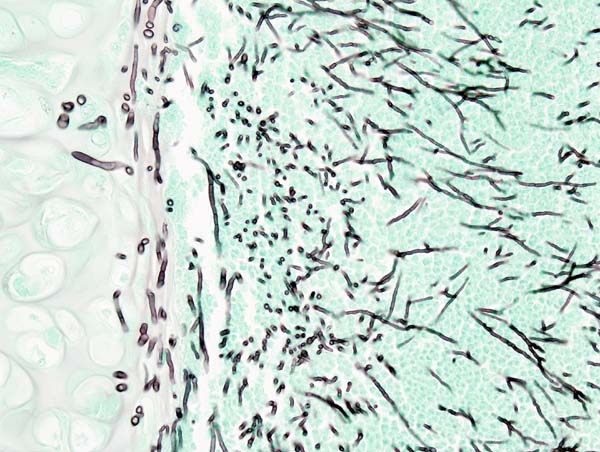
., Gridley stain or Gomori methenamine-silver . [13] These give the fungal walls a gray-black colour. The hyphae of Aspergillus species range in diameter from 2.5 to 4.5 µm. ... If the underlying neutropenia is not fixed, rapid and uncontrolled hyphal growth of the invasive fungi will occur and result in negative health outcomes. [15] Prevention [ edit ] Prevention of aspergillosis involves a reduction of mold exposure via environmental infection-control. ... PMID 24151434 . ^ Garcia-Vidal C, Upton A, Kirby KA, Marr KA (October 2008). "Epidemiology of invasive mold infections in allogeneic stem cell transplant recipients: biological risk factors for infection according to time after transplantation" . ... "Liposomal amphotericin B as initial therapy for invasive mold infection: a randomized trial comparing a high-loading dose regimen with standard dosing (AmBiLoad trial)" . ... (Review) External links [ edit ] USGS National Wildlife Health Center Aspergillus & Aspergillosis Website National Aspergillosis Centre, Manchester, UK Aspergillosis Community Website (primarily for patients and carers) Classification D ICD - 10 : B44 ICD - 9-CM : 117.3 MeSH : D001228 External resources MedlinePlus : 001326 eMedicine : med/174 Patient UK : Aspergillosis v t e Fungal infection and mesomycetozoea Superficial and cutaneous ( dermatomycosis ): Tinea = skin ; Piedra ( exothrix / endothrix ) = hair Ascomycota Dermatophyte ( Dermatophytosis ) By location Tinea barbae / tinea capitis Kerion Tinea corporis Ringworm Dermatophytids Tinea cruris Tinea manuum Tinea pedis (athlete's foot) Tinea unguium/onychomycosis White superficial onychomycosis Distal subungual onychomycosis Proximal subungual onychomycosis Tinea corporis gladiatorum Tinea faciei Tinea imbricata Tinea incognito Favus By organism Epidermophyton floccosum Microsporum canis Microsporum audouinii Trichophyton interdigitale/mentagrophytes Trichophyton tonsurans Trichophyton schoenleini Trichophyton rubrum Trichophyton verrucosum Other Hortaea werneckii Tinea nigra Piedraia hortae Black piedra Basidiomycota Malassezia furfur Tinea versicolor Pityrosporum folliculitis Trichosporon White piedra Subcutaneous , systemic , and opportunistic Ascomycota Dimorphic (yeast+mold) Onygenales Coccidioides immitis / Coccidioides posadasii Coccidioidomycosis Disseminated coccidioidomycosis Primary cutaneous coccidioidomycosis .
Aspergillosis is an infection, growth, or allergic response caused by the Aspergillus fungus. There are several different kinds of aspergillosis. One kind is allergic bronchopulmonary aspergillosis (also called ABPA), a condition where the fungus causes allergic respiratory symptoms similar to asthma, such as wheezing and coughing, but does not actually invade and destroy tissue. Another kind of aspergillosis is invasive aspergillosis. This infection usually affects people with weakened immune systems due to cancer, AIDS, leukemia, organ transplantation, chemotherapy, or other conditions or events that reduce the number of normal white blood cells. In this condition, the fungus invades and damages tissues in the body. Invasive aspergillosis most commonly affects the lungs, but can also cause infection in many other organs and can spread throughout the body (commonly affecting the kidneys and brain).
A rare infectious disease caused by inhalation of the opportunistic fungus aspergillus that can lead to the following manifestations: allergic bronchopulmonary aspergillosis (ABPA), aspergilloma, chronic necrotizing pulmonary aspergillosis (CNPA), and invasive aspergillosis (IA). Aspergilloma occurs in patients with cavitary lung disease and results in a fungal mass with variable clinical presentations from asymptomatic to life-threatening (massive hemoptysis). CNPA manifests as subacute pneumonia in patients with underlying disease. IA is disseminated aspergillosis that eventually invades other organs. Cutaneous aspergillosis is usually the dermatological manifestation of IA that manifests as erythematous-to-violaceous plaques or papules, often characterized by a central necrotic ulcer or eschar.