-
Ectopic Pregnancy
Wikipedia
The fall in serum hCG over 48 hours may be measured as the hCG ratio, which is calculated as: [4] h C G r a t i o = h C G a t 48 h h C G a t 0 h {\displaystyle hCG~ratio={\frac {hCG~at~48h}{hCG~at~0h}}} An hCG ratio of 0.87, that is, a decrease in hCG of 13% over 48 hours, has a sensitivity of 93% and specificity of 97% for predicting a failing pregnancy of unknown location (PUL). [4] The majority of cases of ectopic pregnancy will have serial serum hCG levels that increase more slowly than would be expected with an IUP (that is, a suboptimal rise ), or decrease more slowly than would be expected with a failing PUL. ... References [ edit ] ^ a b c d e f g h i j k l m n o p q r s Crochet JR, Bastian LA, Chireau MV (April 2013). ... PMID 23613077 . S2CID 205049738 . ^ a b c d e f g h i j k Cecchino GN, Araujo Júnior E, Elito Júnior J (September 2014). ... PMC 7389314 . PMID 32609376 . ^ Marret H, Fauconnier A, Dubernard G, Misme H, Lagarce L, Lesavre M, et al. ... ISBN 978-0-8247-0844-3 . ^ Fernandez H, Capmas P, Lucot JP, Resch B, Panel P, Bouyer J (May 2013).CRISP3, DNAAF2, CFAP298, TTC25, DNAL1, RSPH3, CFAP300, CCDC65, RSPH1, DRC1, CCDC114, LRRC56, CCDC151, DNAAF1, PIH1D3, DNAAF4, RSPH9, GAS2L2, CCDC39, MCIDAS, RSPH4A, DNAAF3, DNAJB13, DNAI2, CCDC103, DNAH5, DNAH1, GAS8, RPGR, SPAG1, OFD1, DNAH11, ARMC4, LRRC6, CCNO, DNAI1, STK36, NME8, ZMYND10, HYDIN, DNAAF5, CCDC40, VEGFA, TRO, MUC1, LIF, HOXA11, CNR1

-
Tick Paralysis
Wikipedia
In the TV show, Emergency! , Season 5, Episode 4, " Equipment " (first aired Oct. 4, 1975), Dr. Joe Early diagnoses a young boy who has fallen from a tree with tick paralysis, after eliminating polio as a cause. [14] In the TV show, House , Season 2, Episode 16, " Safe ", Dr House diagnoses a patient (played by Michelle Trachtenberg ) with tick paralysis. [15] In the TV show, Remedy , Season 1 Episode 7, " Tomorrow, the Green Grass ", Rebecca is diagnosed with tick paralysis. In the TV show, Royal Pains , Season 1 Episode 3, " Strategic Planning ", a US Senator's teenage son is diagnosed with and overcomes tick paralysis. In the TV show, Chicago Med , Season 3, Episode 5, " Mountains and Molehills ", a young girl returning from Australia with increasing paralysis is diagnosed with tick paralysis. ... Stone; K. C. Binnington; M. Gauci; J. H. Aylward (1989). "Tick/host interactions forIxodes holocyclus: Role, effects, biosynthesis and nature of its toxic and allergenic oral secretions".
-
Obsessive Love
Wikipedia
Symptoms include an inability to tolerate any time spent without that person, obsessive fantasies surrounding the person, and spending inordinate amounts of time seeking out, making, or looking at images of that person. [1] Contents 1 Characteristics 2 Psychology 3 In culture 3.1 In books and tv 3.2 In anime 4 See also 5 References 6 Further reading 7 External links Characteristics [ edit ] Although obsessive love is not contained in the DSM-5 as a specific mental disorder, it can often accompany other mental illnesses. [2] Depending on the intensity of their attraction, obsessive lovers may feel entirely unable to restrain themselves from extreme behaviors such as acts of violence toward themselves or others. ... The knitting never quite looks right from then on, unless we unpick it and start again from the mistake." [3] Sigmund Freud considered that obsessive love might be underpinned by an unconscious feeling of hate for which it overcompensated - thereby explaining the sufferer's feeling of a need to protect the love object. [6] Later analysts saw obsessive love as driven more by narcissistic need , the preoccupation with the love-object offering defences against worries and depressive feelings; [7] while Jungians see it as rooted in the projection of the inner self onto another person. [8] In culture [ edit ] In books and tv [ edit ] Marcel Proust dissected (his own style of) obsessive love in À la recherche du temps perdu . [9] You , a 2014 thriller novel by Caroline Kepnes portrays obsessive love disorder. ... Retrieved 2017-03-18 . ^ https://www.marriage.com/advice/love/obsessive-love-disorder/ Obsessive Love Disorder 101 ^ S Freud, Case Histories II (PFL 9) p. 118-9 and p. 70-1 ^ O Fenichel, The Psychoanalytic Theory of Neurosis (London 1946) p. 382 and p. 533 ^ C Jung, Man and his Soul (London 1964) p. 191 ^ H Moss, The Magic Lantern of Marcel Proust (2012) p. 51 ^ Yahr, Emily (January 18, 2019). " ' You' was ignored on Lifetime, then it blew up on Netflix – what does it mean for TV's future?"
-
Klüver–bucy Syndrome
Wikipedia
The six points of difference that Klüver recorded were visual agnosia, an increased tendency to explore items by mouth, hypermetamorphosis , dampening of emotional expression, altered sexual behavior and differences in diet. [5] Klüver later discovered similar observations by Sanger Brown and Edward Albert Sharpey-Schafer that had been published in 1881 and drew on these to substantiate his own observations. [6] Monkeys in the Klüver-Bucy experiment evidently had normal vision and motor skills, but exhibited "psychic blindness", what Rusiko Bourtchouladze described in 2004 as an inability to recognize "the emotional importance of events". [7] They did not display fear for items that would ordinarily frighten members of their species; they displayed an appetite for improper foods such as rocks or live rats and sought intercourse with unusual partners, including members of other species. [7] They became extremely interested in exploring items in their environment and became placid when approached. [8] In humans [ edit ] Klüver–Bucy syndrome was first documented among certain humans who had experienced temporal lobectomy in 1955 by H. Terzian and G.D. Ore. [9] It was first noted in a human with meningoencephalitis in 1975 by Marlowe et al. [2] [4] Klüver–Bucy syndrome can manifest after either of these (lobectomies can be medically required by such reasons as accidents or tumors ), but may also appear in humans with acute herpes simplex encephalitis or following a stroke . [10] Other conditions may also contribute to a diagnosis of Klüver–Bucy syndrome, including Pick's disease , Alzheimer's disease , ischemia , anoxia , progressive subcortical gliosis , Rett syndrome , porphyria and carbon monoxide poisoning , among others. [2] It is rare for humans to manifest all of the identified symptoms of the syndrome; three or more are required for diagnosis. [2] Among humans, the most common symptoms include placidity, hyperorality and dietary changes. [2] They may also present with an inability to recognize objects or inability to recognize faces or other memory disorders . ... Sapolsky, who addresses the syndrome and the associated legal significance of neurological defenses. [13] Klüver–Bucy syndrome was featured in the Black Box episode, "The Fear", the episode "Taboo" of the TV series Criminal Minds , the episode "Whistleblowers" of the TV series Blue Bloods , and the episode "Comfort's Overrated" of the TV series Royal Pains . [ citation needed ] See also [ edit ] Frontal lobe disorder Lawrence Weiskrantz Urbach–Wiethe disease References [ edit ] ^ Adel K. ... The Kluver-Bucy syndrome is a clinical syndrome observed in humans and other animals after bilateral lesions in the temporal lobe that involve the amygdala, hippocampal formation, and adjacent neural structures. ^ a b c d e f g h i j Salloway, Stephen; Paul Malloy; Jeffrey L. ... ISBN 978-0-300-05271-8 . Klüver-Bucy syndrome. ^ Terzian, H.; Ore, G.D. (1955). "Syndrome of Klüver and Bucy; reproduced in man by bilateral removal of the temporal lobes" . ... Produced by Pat Walters. http://www.radiolab.org/story/317421-blame/ Sources [ edit ] Rockland, Kathleen S.; Jon H. Kaas; Alan Peters (1997). Cerebral Cortex: Extrastriate Cortex in Primates .
-
Fear Of Missing Out
Wikipedia
Other brands attempt counter FOMO, such as Nescafé's "Wake up to life" campaign. [2] Harnessing TV viewers' FOMO is also perceived to foster higher broadcast ratings. Real-time updates about status and major social events allow for a more engaging media consumption experience and faster dissemination of information. [2] Real-time tweets about the Super Bowl are considered to be correlated with higher TV ratings due to their appeal to FOMO and the prevalence of social media usage. [2] See also [ edit ] Hyperbolic discounting Kiasu Loss aversion Missed connections Murray's system of needs Opportunity cost Relative deprivation Self-determination theory Social media Status anxiety Social proof References [ edit ] ^ Anderson, Hephzibah (16 April 2011). ... Retrieved 6 June 2017 . ^ a b c d e f g h "Fear of Missing Out (FOMO)" (PDF) . ... Archived from the original (PDF) on June 26, 2015. ^ a b c d e f g h Przybylski, Andrew K.; Murayama, Kou; DeHaan, Cody R.; Gladwell, Valerie (July 2013). ... World of Psychology . Psych Central . ^ "Woods, H. C. and Scott, H. (2016) #Sleepyteens: social media use in adolescence is associated with poor sleep quality, anxiety, depression and low self-esteem.
-
Television Addiction
Wikipedia
. ^ a b Sweet, Anne (2017). "Dependence in / on TV series II (Séries et dépendance: Dépendance aux séries II)" . ... The Art of Binge-Watching, and Netflix's Addiction-Creating Production Strategies" in "Combining Aesthetic and Psychological Approaches to TV Series Addiction" . Cambridge Scholars. ISBN 9781527514492 . ^ McIlwraith, Robert. " " I', addicted to television": the personality, imagination, and TV watching patterns of self-identified TV addicts" . www.bnet.com . ... External links [ edit ] Article by Michael D. Pollock "How I Overcame TV Addiction, Reclaimed My Life and Gained Two Extra Months Per Year" Scientific American Article "No Mere Metaphor" Reader's Digest Article v t e Reinforcement disorders: Addiction and Dependence Addiction Drug Alcohol Amphetamine Cocaine Methamphetamine Methylphenidate Nicotine Opioid Behavioral Financial Gambling Shopping Palatable food Sex-related Intercourse Pornography Internet-related Internet addiction disorder Internet sex addiction Video game addiction Digital media addictions Cellular mechanisms Transcriptional ΔFosB c-Fos Cdk5 CREB GluR2 NF-κB Epigenetic G9a G9a-like protein HDAC1 HDAC2 HDAC3 HDAC4 HDAC5 HDAC9 HDAC10 SIRT1 SIRT2 ...
-
Pulmonary Atresia-Intact Ventricular Septum Syndrome
Orphanet
PA-IVS presents significant morphologic diversity: at the end of the spectrum are patients with a mildly hypoplastic and tripartite right ventricle (RV) and mild tricuspid valve (TV) hypoplasia, and at the other end are patients with severe RV and TV hypoplasia, often with RV-dependent coronary circulation.
-
Excess Skin
Wikipedia
Contents 1 Notable Cases 2 TLC Skin Tight TV Show 3 Literature 4 References Notable Cases [ edit ] In March 2015, Kaitlyn Smith shared her experience after losing 208 pounds (“half her size”), [1] having once weighed more than 400 lbs. ... Erica told People the decision to get surgery wasn’t easy, but that she had a “new body” and was “floored” at the postoperative results. [8] [9] TLC Skin Tight TV Show [ edit ] TLC Skin Tight was a TV show with each episode following “two people who have lost massive amounts of weight and are about to undergo a full body transformation through skin removal surgery.” [10] “It’s not unusual, says the show, for there to be “up to 50 pounds” of sagging skin following massive weight loss. ... utm_source=ig_web_copy_link ^ https://people.com/health/erica-lugo-surgery-remove-loose-skin/ ^ https://people.com/health/biggest-loser-trainer-erica-lugo-is-floored-after-tummy-tuck/ ^ https://www.tlc.com/tv-shows/skin-tight/about ^ https://www.imdb.com/title/tt5865516/releaseinfo?

-
Drug-Induced Amnesia
Wikipedia
The most commonly used group of prescription drugs which can produce amnesia are benzodiazepines, especially if combined with alcohol, however, in limited quantities, triazolam (Halcion) is not associated with amnesia or memory impairment. [7] In popular culture [ edit ] In the 1970 science fiction TV series UFO , amnesia drugs were given to anyone who had contact with SHADO operatives, or witnessed their covert activities. ... In the series 3 episode of Doctor Who , Gridlock , drugs that induce amnesia are sold in patch form with the name "forget." In the TV series Blindspot , the memory of the main character, Jane, was totally wiped using a drug called ZIP. [10] [11] In the 2018 Swedish film The Unthinkable a chemical that induces memory loss, spread via rain, is used as a prelude to an invasion of Sweden. ... Consumption causes sorrowful memories to be forgotten. [12] [13] References [ edit ] ^ a b Curran, H. Valerie. "Psychopharmalogical Perspectives on Memory."
-
Lori And George Schappell
Wikipedia
Media [ edit ] Lori and George have appeared in the following programs or articles: 1993: The Maury Povich Show September 11, 1997: The Unexplained :"The Twin Connection", as Lori and Dori September 12, 1998: The Howard Stern Radio Show October 7, 1998: Howard Stern 1998: A&E documentary Face to Face: The Schappell Sisters 2000: The Learning Channel documentary Separate Lives May 15, 2002: The Jerry Springer Show ; George was billed as Reba Schappell [6] August 17, 2004: American TV show Nip/Tuck , in the episode "Rose and Raven Rosenberg"; Raven was played by George (billed as Reba) Schappell; Rose was played by Lori Schappell May 31, 2002: Howard Stern 2005 TV Documentary: Medical Incredible . A documentary on Discovery Health Channel. 2005 TV documentary: Extraordinary People: Joined at the Head ; George was billed as Dori Schappell September 24, 2007: The Greek reality show Aksizei na to deis ( Worth Seeing – Αξιζει να το δεις ) 2007: The romantic comedy film X's & O's 2007: TV documentary Inside Extraordinary Humans: Science of Conjoined Twins References [ edit ] ^ Best Doctors, Separation Anxiety , see below ^ BBC – Sisters' Hope . see below. ^ USA Weekly News, Ripley's Believe it or Not Archived 2007-09-29 at the Wayback Machine Direct quote: "Tona Lewis, left, of Brick, N.J., shakes hands with conjoined twins Lori and George Schappell during the grand opening celebration of Ripley's Believe It or Not Odditorium Thursday, June 21, 2007 in New York's Times Square." ^ BBC – Sisters' Hope .
-
Hyperthymesia
Wikipedia
Television [ edit ] A 2011 episode of the TV series House entitled "You Must Remember This" is about a waitress with hyperthymesia. The entire 2011 TV series Unforgettable is centered around a police detective with hyperthymesia. ... PMID 16517514 . ^ a b LePort, A.; Mattfeld, A.; Dickinson-Anson, H.; Fallon, J.; Stark, C.; Kruggel, F.; Cahill, L.; McGaugh, J. (2012). ... Retrieved 2014-05-29 . ^ Sam Wollaston. "TV review: The Boy Who Can't Forget; The Paradise" . the Guardian . ^ "The Boy Who Can't Forget: Aurelien Heyman, Jill Price and Bob Petrella demonstrate their marvellous memories in this Channel 4 documentary - Unreality TV" . Unreality TV . Archived from the original on 2014-10-23. ^ "Rare detailed personal memory a burden, and ultimately a gift" . ^ David Robson (26 January 2016).
-
Abby And Brittany Hensel
Wikipedia
In 2002, they appeared in Joined for Life , a TV documentary by Advanced Medical Productions, distributed on the Discovery Health Channel [12] and a 2003 follow-up, Joined at Birth . [13] In 2003, an updated story of them at age 11 (filmed in 2001) was published in Time and again in Life . ABC TV also did a documentary called "Joined For Life". [14] [15] A UK television special in 2005 as part of the series Extraordinary People . [16] In 2006, Advanced Medical made another documentary, Joined for Life: Abby & Brittany turn 16 , [17] that discusses their adolescence, school, social life, and activities such as getting their driver's licenses . [7] The twins starred in the reality TV show Abby & Brittany that started in August 2012. [2] Abby and Brittany: Joined for Life was shown by the BBC in the UK in May 2013, and covers the period from their finishing college to starting a part-time teaching job. [18] Filmography [ edit ] Documentaries and other television appearances include: First aired Title Distributor Produced by April 8, 1996 The Oprah Winfrey Show King World Productions Harpo Productions March 27, 2003 Joined for Life Discovery Channel Advanced Medical Productions, American Broadcasting Company December 17, 2006 Joined for Life: Abby and Brittany Turn 16 [19] TLC Advanced Medical Productions February 19, 2007 Extraordinary People: The Twins Who Share a Body [20] Five (UK) One North August 28, 2012 Abby & Brittany TLC References [ edit ] ^ "Sunnyside Staff Directory / Sunnyside Staff Directory" . Retrieved 18 July 2020 . ^ a b "Conjoined twins 'Abby & Brittany' get their own reality show" . Yahoo!TV. Archived from the original on 2012-08-09 . ... Find Articles. 1996-10-04. ^ "Joined For Life" , Advanced Medical Productions, 2002, accessed November 11, 2012 ^ Joined at Birth , Advanced Medical Productions, 2003, accessed November 11, 2012 ^ "ABC TV Documentaries: Joined For Life" . abc.net.au . 2003-03-27.
-
Bletting
Wikipedia
Thomas Dekker also draws a similar comparison in his play The Honest Whore : "I scarce know her, for the beauty of her cheek hath, like the moon, suffered strange eclipses since I beheld it: women are like medlars – no sooner ripe but rotten." Elsewhere in literature, D. H. Lawrence dubbed medlars "wineskins of brown morbidity." ... A.; Sanz, C.; VanderJagt, D. J.; Huang, H. S.; Chuang, L. T.; Strnad, M. (2003). ... Food Chemistry . 83 (3): 363–369. doi : 10.1016/s0308-8146(03)00097-9 . ^ Rop, O.; Sochor, J.; Jurikova, T.; Zitka, O.; Skutkova, H.; Mlcek, J.; Salas, P.; Krska, B.; Babula, P.; Adam, V.; Kramarova, D.; Beklova, M.; Provaznik, I.; Kizek, R. (2011). ... PMID 21189456 . v t e Cooking techniques List of cooking techniques Dry Conduction Dry roasting Hot salt frying Searing Convection Baking Roasting (modern) Smoking Barbecue Radiation Grilling (charbroiling) Roasting (traditional) Rotisserie Toasting Wet High heat Blanching Boiling Decoction Parboiling Shocking Reduction Low heat Coddling Creaming Infusion Poaching Simmering Slow cooking Smothering Steeping Stewing Indirect heat Bain-marie (Double boiling) Sous-vide Double steaming Steaming Fat-based High heat Blackening Browning Deep frying Pan frying Shallow frying Stir frying (bao) Sautéing Low heat Gentle frying Sweating Mixed medium Barbecuing Braising Flambé Fricassee Indirect grilling/Plank cooking Stir frying (chao) Device-based Air frying Microwaving Pressure cooking Pressure frying Thermal cooking Non-heat Curing Fermenting Pickling Souring See also List of cooking appliances List of cooking vessels Outdoor cooking Food preparation Food preservation Food safety Caramelization Food portal Drink portal Category Commons Cookbook WikiProject v t e William Shakespeare 's Measure for Measure Characters Angelo Sources Hecatommithi by Cinthio Promos and Cassandra by George Whetstone Theatrical Adaptations The Law Against Lovers (1662) Das Liebesverbot (1834) Round Heads and Pointed Heads (1936) Desperate Measures (2004) Film Adaptations Measure for Measure (1943) Measure for Measure (1979; TV) Related Thomas Middleton Mariana (Tennyson) Bletting Bed trick Shakespearean problem play Mariana (Millais)
-
Supernumerary Nipple
Wikipedia
Society and culture [ edit ] Television [ edit ] The Triple Nipple Club is a documentary shown on Channel 4 which explored the biological mystery of the supernumerary nipple. [9] First broadcast on 2 January 2008, it was directed and produced by Dan Louw and commissioned as part of Channel 4's First Cut series. [10] The film focuses on Louw's attempts to understand why he was born with extra nipples, a condition he shares with the likes of Mark Wahlberg , [11] Lily Allen , [12] and Tilda Swinton , as well as well known TV and film characters such as the Bond villain Scaramanga and Chandler Bing . ... ISBN 978-1-4160-2999-1 . ^ [ https://link.springer.com/article/10.1007/s004310050944 ], Supernumerary nipples: prevalence, size, sex and side predilection – a prospective clinical study, H. Schmidt, European Journal of Pediatrics volume 157, pages 821–823 (1998). ^ [ https://jamanetwork.com/journals/jamapediatrics/article-abstract/511138 ], Occurrence of Supernumerary Nipples in Newborns Francis Mimouni, MD; Paul Merlob, MD; Salomon H.GPC3, ACTB, PORCN, PGAP2, RNF216, TMCO1, PIGV, HDAC8, KLHL7, ARHGAP31, COLEC11, COLEC10, CSPP1, PIGO, PIGY, PGAP3, CKAP2L, ASXL1, PNPLA6, ZEB2, TFAP2A, KIAA0586, DHODH, MEGF8, GPC4, KRAS, NONO, MASP1, TCF4, PIGW, TFAP2B, KAT6A, TRRAP, IKBKG, TP63, PIGL, HDAC4, BRCA2

-
The Truman Show Delusion
Wikipedia
This man soon learns that his life is being broadcast 24/7 to TV watchers worldwide. [4] Author Philip K. ... Such a person would believe they are constantly being videotaped, watched, and commented upon by a large TV audience. [7] Reported cases [ edit ] While the prevalence of the disorder is not known, there have been several hundred cases reported. ... They have reported that one patient traveled to New York City after 9/11 to make sure that the terrorist attacks were not a plot twist in his personal Truman Show, while another traveled to a Lower Manhattan federal building to seek asylum from his show. [3] Another patient had worked as an intern on a reality TV program, and believed that he was secretly being tracked by cameras, even at the polls on Election Day in 2004. ... Medical relevance [ edit ] The Truman Show delusion is not officially recognized and is not a part of the Diagnostic and Statistical Manual of the American Psychiatric Association . [1] The Golds do not say that it is a new diagnosis but refer to it as "a variance on known persecutory and grandiose delusions." [7] Filmmaker's reaction [ edit ] After hearing about the condition, Andrew Niccol , writer of The Truman Show , said, "You know you've made it when you have a disease named after you." [11] See also [ edit ] Dream argument Five minute hypothesis Frank Chu Solipsism Matrix hypothesis Problem of other minds References [ edit ] Notes ^ a b Grohol, John M. "DSM-VI: Reality TV Disorder" on PsychCentral ^ Marantz, Andrew (September 16, 2013). ... S2CID 41662275 . ^ a b c Wright, Suzanne "The Truman Delusion" on WebMD ^ a b c d "Reality Bites" Archived 2015-09-24 at the Wayback Machine National Post (July 21, 2008) ^ Ellison, Jesse "When Life is Like a TV Show" Newsweek (August 2, 2008) ^ Fusar-Poli, Paolo; Howes, O.; Valmaggia, L.; McGuire, P. (2008). " ' Truman' signs and vulnerability to psychosis" .
-
Pseudomonas Infection
Wikipedia
S2CID 36236448 . ^ Levitski-Heikkila TV, Ullian ME (2005). "Peritonitis with multiple rare environmental bacteria in a patient receiving long-term peritoneal dialysis". ... Int J Syst Bacteriol . 35 (Pt 2): 467–74. doi : 10.1099/00207713-35-4-467 . ^ Nishimori E, Kita-Tsukamoto K, Wakabayashi H (2000). "Pseudomonas plecoglossicida sp. nov., the causative agent of bacterial haemorrhagic ascites of ayu, Plecoglossus altivelis" . ... External links [ edit ] Classification D ICD - 10 : B96.5, J15.1, P23.5 ICD - 9-CM : 041.7 , 482.1 MeSH : D011552 v t e Proteobacteria -associated Gram-negative bacterial infections α Rickettsiales Rickettsiaceae / ( Rickettsioses ) Typhus Rickettsia typhi Murine typhus Rickettsia prowazekii Epidemic typhus , Brill–Zinsser disease , Flying squirrel typhus Spotted fever Tick-borne Rickettsia rickettsii Rocky Mountain spotted fever Rickettsia conorii Boutonneuse fever Rickettsia japonica Japanese spotted fever Rickettsia sibirica North Asian tick typhus Rickettsia australis Queensland tick typhus Rickettsia honei Flinders Island spotted fever Rickettsia africae African tick bite fever Rickettsia parkeri American tick bite fever Rickettsia aeschlimannii Rickettsia aeschlimannii infection Mite-borne Rickettsia akari Rickettsialpox Orientia tsutsugamushi Scrub typhus Flea-borne Rickettsia felis Flea-borne spotted fever Anaplasmataceae Ehrlichiosis : Anaplasma phagocytophilum Human granulocytic anaplasmosis , Anaplasmosis Ehrlichia chaffeensis Human monocytotropic ehrlichiosis Ehrlichia ewingii Ehrlichiosis ewingii infection Rhizobiales Brucellaceae Brucella abortus Brucellosis Bartonellaceae Bartonellosis : Bartonella henselae Cat-scratch disease Bartonella quintana Trench fever Either B. henselae or B. quintana Bacillary angiomatosis Bartonella bacilliformis Carrion's disease , Verruga peruana β Neisseriales M+ Neisseria meningitidis/meningococcus Meningococcal disease , Waterhouse–Friderichsen syndrome , Meningococcal septicaemia M− Neisseria gonorrhoeae/gonococcus Gonorrhea ungrouped: Eikenella corrodens / Kingella kingae HACEK Chromobacterium violaceum Chromobacteriosis infection Burkholderiales Burkholderia pseudomallei Melioidosis Burkholderia mallei Glanders Burkholderia cepacia complex Bordetella pertussis / Bordetella parapertussis Pertussis γ Enterobacteriales ( OX− ) Lac+ Klebsiella pneumoniae Rhinoscleroma , Pneumonia Klebsiella granulomatis Granuloma inguinale Klebsiella oxytoca Escherichia coli : Enterotoxigenic Enteroinvasive Enterohemorrhagic O157:H7 O104:H4 Hemolytic-uremic syndrome Enterobacter aerogenes / Enterobacter cloacae Slow/weak Serratia marcescens Serratia infection Citrobacter koseri / Citrobacter freundii Lac− H2S+ Salmonella enterica Typhoid fever , Paratyphoid fever , Salmonellosis H2S− Shigella dysenteriae / sonnei / flexneri / boydii Shigellosis , Bacillary dysentery Proteus mirabilis / Proteus vulgaris Yersinia pestis Plague / Bubonic plague Yersinia enterocolitica Yersiniosis Yersinia pseudotuberculosis Far East scarlet-like fever Pasteurellales Haemophilus : H. influenzae Haemophilus meningitis Brazilian purpuric fever H. ducreyi Chancroid H. parainfluenzae HACEK Pasteurella multocida Pasteurellosis Actinobacillus Actinobacillosis Aggregatibacter actinomycetemcomitans HACEK Legionellales Legionella pneumophila / Legionella longbeachae Legionnaires' disease Coxiella burnetii Q fever Thiotrichales Francisella tularensis Tularemia Vibrionaceae Vibrio cholerae Cholera Vibrio vulnificus Vibrio parahaemolyticus Vibrio alginolyticus Plesiomonas shigelloides Pseudomonadales Pseudomonas aeruginosa Pseudomonas infection Moraxella catarrhalis Acinetobacter baumannii Xanthomonadaceae Stenotrophomonas maltophilia Cardiobacteriaceae Cardiobacterium hominis HACEK Aeromonadales Aeromonas hydrophila / Aeromonas veronii Aeromonas infection ε Campylobacterales Campylobacter jejuni Campylobacteriosis , Guillain–Barré syndrome Helicobacter pylori Peptic ulcer , MALT lymphoma , Gastric cancer Helicobacter cinaedi Helicobacter cellulitis
-
Salivary Gland–like Carcinoma Of The Lung
Wikipedia
You can help by adding to it . ( March 2018 ) References [ edit ] ^ a b c d e Travis, William D; Brambilla, Elisabeth; Muller-Hermelink, H Konrad; et al., eds. (2004). Pathology and Genetics of Tumours of the Lung, Pleura, Thymus and Heart (PDF) . ... PMID 2987102 . ^ Brambilla E, Travis WD, Colby TV, Corrin B, Shimosato Y (December 2001).
-
Berdon Syndrome
Wikipedia
. ^ Berdon, WE; Baker, DH; Blanc, WA; Gay, B; Santulli, TV; Donovan, C (1976). "Megacystis-microcolon-intestinal hypoperistalsis syndrome: A new cause of intestinal obstruction in the newborn. ... PMID 178239 . ^ Halim, Danny; Brosens, Erwin; Muller, Françoise; Wangler, Michael F; Beaudet, Arthur L; Lupski, James R; Akdemir, Zeynep H Coban; Doukas, Michael; Stoop, Hans J; De Graaf, Bianca M; Brouwer, Rutger WW; Van Ijcken, Wilfred FJ; Oury, Jean-François; Rosenblatt, Jonathan; Burns, Alan J; Tibboel, Dick; Hofstra, Robert MW; Alves, Maria M (2017).

-
Mitochondrial Encephalomyopathy, Lactic Acidosis, And Stroke-Like Episodes
MedlinePlus
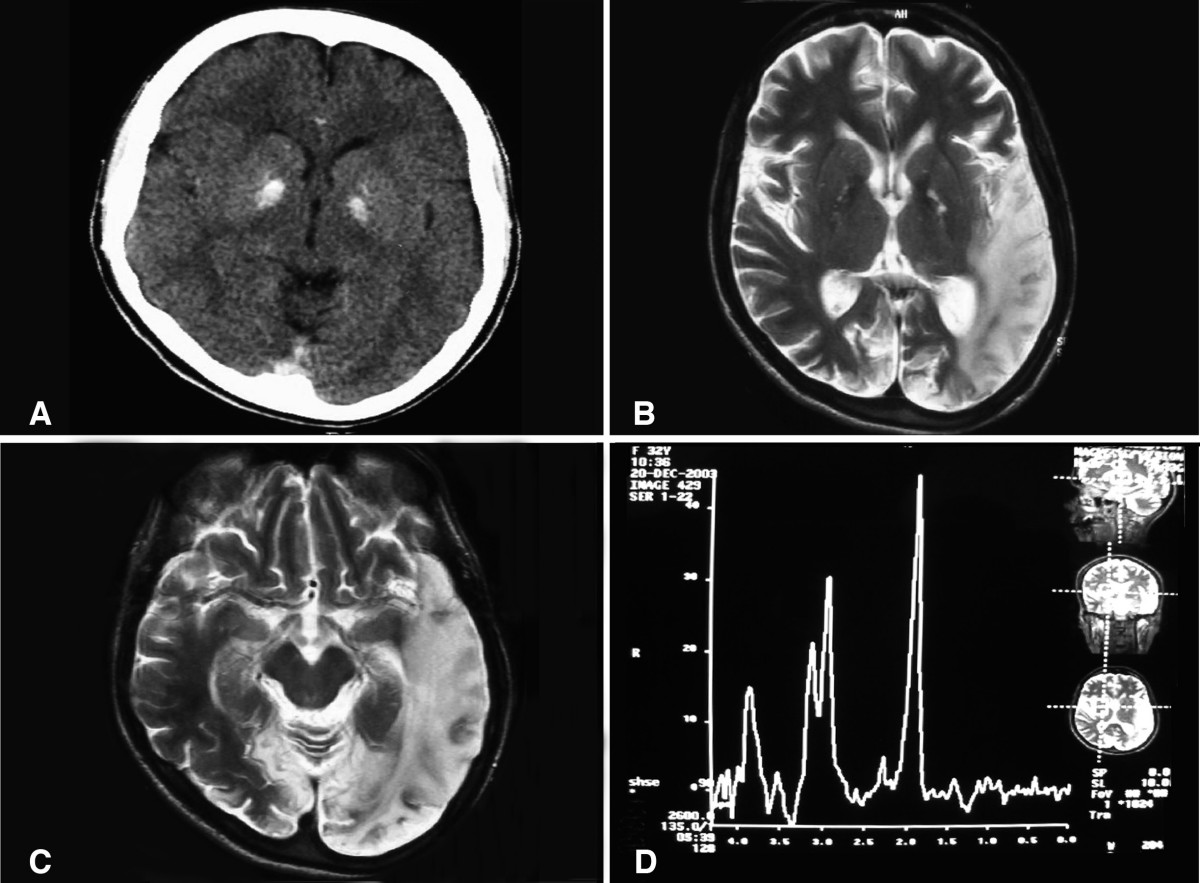
Causes MELAS can result from mutations in one of several genes, including MT-ND1 , MT-ND5 , MT-TH , MT-TL1 , and MT-TV . These genes are found in the DNA of cellular structures called mitochondria , which convert the energy from food into a form that cells can use. ... Learn more about the genes and chromosome associated with Mitochondrial encephalomyopathy, lactic acidosis, and stroke-like episodes MT-ND1 MT-ND5 MT-TH MT-TL1 MT-TV mitochondrial dna Inheritance Pattern This condition is inherited in a mitochondrial pattern , which is also known as maternal inheritance.ND5, ND1, ND6, TRNS1, TRNW, TRNF, TRNQ, COX1, COX2, COX3, TRNL1, ND4, TRNS2, TRNK, TRNH, TRNC, TRNV, CYTB, SOD2, SOD1, IL1B, IL1A, ATP6, TRNA, TRNE, TRNL2, TRNI, TRNP, TRNN, NDUFS1, POLG, NPTX2, COX5A, TWNK, MTCO2P12, CPOX, COX8A, RNR2, TRMU, TOMM20, PPARGC1A, SDS, FASTKD2, P2RX2, PRPF6, FGF21, MRM2, SLC25A4, TNFSF10, COQ8A, RARS2, MAPKAP1, GFM2, OR10T2, GLIS3, MIR27B, LINC01672, ASNS, TPO, MTERF1, NDUFV1, ND3, ATXN3, MTOR, ACTB, FH, SARDH, DDIT3, NDUFA1, PNP, RNR1, COL4A1, PRSS1, SDHB, CALB1, RERE, SORD, TFAM, TG, ABL2
-
Large-Cell Lung Carcinoma With Rhabdoid Phenotype
Wikipedia
Ultrastruct Pathol . 20 (4): 355–60. doi : 10.3109/01913129609016337 . PMID 8837343 . ^ a b c d e f g h Travis, William D; Brambilla, Elisabeth; Muller-Hermelink, H Konrad; et al., eds. (2004). ... PMID 8545590 . ^ a b c d e f g Shimazaki H, Aida S, Sato M, Deguchi H, Ozeki Y, Tamai S (May 2001). ... PMID 6186379 . S2CID 33701361 . ^ a b c d e f g h Saini G, Kumar M, Julka PK, Puri T, Sharma M, Rath GK (2009). ... Cancer . 91 (11): 1992–2000. doi : 10.1002/1097-0142(20010601)91:11<1992::AID-CNCR1224>3.0.CO;2-5 . PMID 11391577 . ^ Takei H; Asamura H; Maeshima A; et al. (August 2002). ... Atlanta: American Cancer Society. ^ Colby TV, Koss MN, Travis WD (1995). "Carcinoid and other neuroendocrine tumors".


