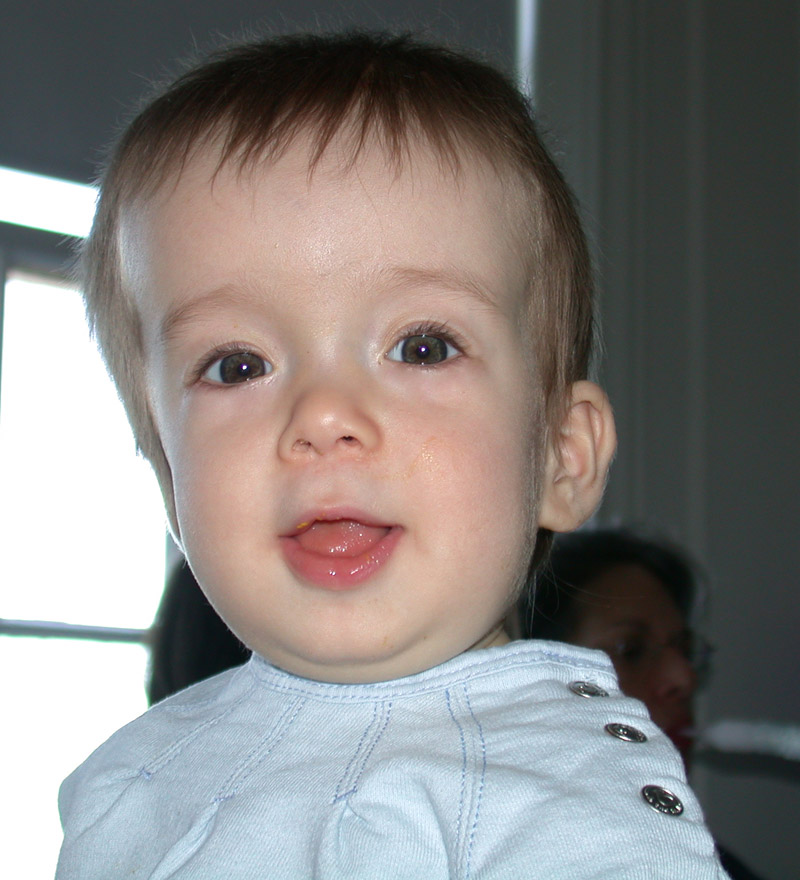
The patient had rigid fingers and bilateral clubfeet at birth. Deep-set eyes, a triangular face, and prominent ears were evident from an early age. At age 17, he had limited horizontal and vertical eye movements, a rigid back, stiff walk, anteverted hunched shoulders, and pectus excavatum. ... INHERITANCE - Autosomal dominant GROWTH Height - Short stature HEAD & NECK Face - Micrognathia - Facial asymmetry (mild) Eyes - Ptosis - Epicanthal folds - Ophthalmoplegia (in some patients) Mouth - Cleft palate - Submucous cleft - Bifid uvula - High-arched palate Neck - Short neck - Mild neck webbing CHEST External Features - Sloping shoulders - Pectus excavatum GENITOURINARY Internal Genitalia (Male) - Cryptorchidism SKELETAL Spine - Lumbar lordosis - Kyphoscoliosis - Thoracolumbar scoliosis Pelvis - Congenital hip dislocation - Limited hip abduction Limbs - Knee flexion contractures Hands - Short fingers - Camptodactyly of proximal interphalangeal joint - Ulnar deviation - Cutaneous syndactyly - Single transverse palmar creases - Absence of interphalangeal creases Feet - Talipes equinovarus - Camptodactyly - Overlapping toes SKIN, NAILS, & HAIR Skin - Single transverse palmar creases - Absence of interphalangeal creases MUSCLE, SOFT TISSUES - Decreased muscle mass (especially of limbs) NEUROLOGIC Central Nervous System - Chiari I malformation of the cerebellum (in some patients) - Intellectual disability, mild (in some patients) - Psychomotor delay, mild (in some patients) MOLECULAR BASIS - Caused by mutation in the PIEZO-type mechanosensitive ion channel component 2 gene (PIEZO2, 613629.0001 ) ▲ Close
Gordon Syndrome is a rare, inherited disorder that affects movement in the joints of the upper and lower limbs, also known as distal arthrogryposis . People with this disorder can be born with several fingers fixed in a flexed position (camptodactyly), clubfoot , and an opening in the roof of the mouth (cleft palate). Their joints are often very stiff or unable to move. Intelligence is usually normal. The range and severity of symptoms may vary from person to person. Gordon syndrome is caused by genetic changes (mutations) in the PIEZO2 gene and can be inherited in an autosomal dominant pattern. Gordon syndrome is diagnosed by clinical examination and genetic testing.
Gordon syndrome, also known as distal arthrogryposis type 3, is an extremely rare multiple congenital malformation syndrome characterized by congenital contractures of hand and feet with variable degrees of severity of camptodactyly, clubfoot and, less frequently, cleft palate. Intelligence is normal but in some cases, additional abnormalities, such as short stature, kyphoscoliosis, ptosis, micrognathia, and cryptorchidism may also be present. Gordon syndrome, Marden-Walker syndrome and arthrogryposis with oculomotor limitation and electroretinal anomalies clinically and genetically overlap, and could represent variable expressions of the same condition.
There may be more than one pit present in one eye, and the anomaly is most commonly found in the inferotemporal region of the optic disc, although any sector may be involved.
Overview Encopresis (en-ko-PREE-sis), sometimes called fecal incontinence or soiling, is the repeated passing of stool (usually involuntarily) into clothing. ... Get early treatment for encopresis Early treatment, including guidance from your child's doctor or mental health professional, can help prevent the social and emotional impact of encopresis. Regular follow-up visits with your doctor can help identify ongoing or recurring problems so that adjustments in treatment can be made as needed. ... Before your appointment, make a list of: Your child's symptoms, including how long they've been occurring Key personal information, such as any major stresses or recent life changes All medications, including over-the-counter medications and any vitamins, herbs or other supplements that your child is taking, and the doses What your child eats and drinks on a typical day, including the amount and types of dairy products, types of solid foods, and the amount of water and other fluids Questions to ask your child's doctor Some basic questions to ask the doctor include: What's the most likely cause of my child's symptoms? Are there other possible causes for these symptoms? What kinds of tests does my child need? Do these tests require any special preparation? ... Are there any dietary changes that might help? Would more physical activity help my child? Are there any brochures or other printed material that I can have?
Contents 1 Effects of UV light 1.1 Molecular and genetic changes 1.2 Pigmentation 1.3 Immunosuppression 1.4 Degradation of collagen 1.5 Retinoic acids and photodamage 2 Signs, symptoms and histopathology 3 Defense mechanisms 3.1 Epidermal thickness 3.2 Pigment 3.3 Repair of DNA mutation and apoptosis 3.4 Tissue inhibitors of MMPs (TIMPs) 3.5 Antioxidants 4 Treatment 4.1 Primary prevention 4.2 Secondary protection 4.3 Tertiary prevention 5 See also 6 References 7 External links Effects of UV light [ edit ] Molecular and genetic changes [ edit ] UVB rays are a primary mutagen that can only penetrate through the epidermal (outermost) layer of the skin, resulting in DNA mutations. ... Signs, symptoms and histopathology [ edit ] Early symptoms of photoaging: Dyspigmentation, the formation of wrinkles and other symptoms appear around regions of skin commonly exposed to sun, mostly the eyes, mouth and forehead. [8] The lips may be affected. [8] In Canadian women, the upper chest is commonly affected. [8] Spider veins on face and neck Loss of color and fullness in lips Symptoms of photoaging attributed to prolonged exposure to UV: Wrinkles deepen and forehead frown lines can be seen even when not frowning. ... PMID 17166212 . ^ "Photoaging" . ^ http://911skin.com/uvbubarays.html ^ Spiekstra, SW; Breetveld; Rustemeyer; Scheper; Gibbs (September 2007). ... Canadian Dermatology Association . Retrieved 14 May 2018 . ^ https://www.isdin.com/en-US/blog/skincare/anti-aging/what-is-photoaging-and-why-do-we-have-to-care-about-it/ ^ "UpToDate" . www.uptodate.com . ... Retrieved 2018-04-14 . External links [ edit ] https://web.archive.org/web/20110910163035/http://www.biotopix.eu/pdf/W8.pdf http://www.dermatology.ca/photoaging/ https://www.isdin.com/en-US/blog/skincare/anti-aging/what-is-photoaging-and-why-do-we-have-to-care-about-it/ http://911skin.com/uvbubarays.html https://web.archive.org/web/20150209040004/http://www.skincarephysicians.com/agingskinnet/basicfacts.html v t e Radiation-related disorders / Photodermatoses Ultraviolet / ionizing Sunburn Phytophotodermatitis Solar urticaria Polymorphous light eruption Benign summer light eruption Juvenile spring eruption Acne aestivalis Hydroa vacciniforme Solar erythema Non-ionizing Actinic rays Actinic keratosis Atrophic actinic keratosis Hyperkeratotic actinic keratosis Lichenoid actinic keratosis Pigmented actinic keratosis Actinic cheilitis Actinic granuloma Actinic prurigo Chronic actinic dermatitis Infrared / heat Erythema ab igne ( Kangri ulcer Kairo cancer Kang cancer Peat fire cancer ) Cutis rhomboidalis nuchae Poikiloderma of Civatte Other Radiation dermatitis Acute Chronic radiodermatitis ) Favre–Racouchot syndrome Photoaging Photosensitivity with HIV infection Phototoxic tar dermatitis
Specialty Dermatology Solar elastosis separates from the epidermis by a narrow band of normal-appearing collagen (grenz zone) with collagen fibers arranged horizontally. [1] Actinic elastosis , also known as solar elastosis , is an accumulation of abnormal elastin (elastic tissue) in the dermis of the skin , [2] or in the conjunctiva of the eye , [3] which occurs as a result of the cumulative effects of prolonged and excessive sun exposure, a process known as photoaging . ... ISBN 978-0-7020-3485-5 . ^ Klintworth, G; Cummings, T (2009-08-26). "24; The eye and ocular adnexa". In Stacey, Mills (ed.).
It is suggested that these effects can only be due to some factor affecting the red cell structure possibly by modifying the cell envelope.' Two further examples of En(a-) were found in Finland in unrelated persons. The great rarity of the phenotype is indicated by the fact that by 1975 only these 3 families had been discovered (Race and Sanger, 1975). ... Because of the consanguinity, any locus for which the En(a-) persons were heterozygous cannot have been responsible for the En gene. Using this reasoning, ABO, MNSs, Rh, Duffy, Haptoglobin, Kidd, Gm, and Dombrock could be excluded (Race and Sanger, 1975). Although En is independent of MN, MN typing shows a profound derangement in En(a-) persons.
The affliction is named after the 19th-century French author Stendhal ( pseudonym of Marie-Henri Beyle), who described his experience with the phenomenon during his 1817 visit to Florence in his book Naples and Florence: A Journey from Milan to Reggio . When he visited the Basilica of Santa Croce , where Niccolò Machiavelli , Michelangelo and Galileo Galilei are buried, he was overcome with profound emotion. ... I reached the point where one encounters celestial sensations ... Everything spoke so vividly to my soul. Ah, if I could only forget. ... I walked with the fear of falling. [3] Although psychologists have long debated whether Stendhal syndrome exists, the apparent effects on some individuals are severe enough to warrant medical attention. [4] The staff at Florence's Santa Maria Nuova hospital are accustomed to tourists suffering from dizzy spells or disorientation after viewing the statue of David , the artworks of the Uffizi Gallery , and other historic relics of the Tuscan city. [1] Though there are numerous accounts of people fainting while taking in Florentine art, dating from the early 19th century, the syndrome was only named in 1979, when it was described by Italian psychiatrist Graziella Magherini , who observed over a hundred similar cases among tourists in Florence.
This singular intellectual poet has taken my Faustus to himself, and extracted from it the strangest nourishment for his hypochondriac humour. ... These useful writers had fulfilled the poet's saying: departing, they had left behind them Footprints on the sands of time , Footprints which perhaps another—and I was the other! It is my debt to Washington Irving that exercises my conscience, and justly so, for I believe plagiarism was rarely carried farther. ... But I had no guess of it then as I sat writing by the fireside, in what seemed the spring-tides of a somewhat pedestrian inspiration; nor yet day by day, after lunch, as I read aloud my morning's work to the family. It seemed to me original as sin ; it seemed to belong to me like my right eye ... [25] Jerusalem of Gold [ edit ] Jerusalem of Gold ( ירושלים של זהב ) is a 1967 song by Naomi Shemer . ... External link in |work= ( help ) ^ Paco Ibáñez: https://www.youtube.com/watch?v=ttuRcl1dK1M ^ Idit Avrahami; Nurit Wurgaft (6 May 2005). ... CS1 maint: archived copy as title ( link ) ^ 722 F.2d 988, 221 U.S.P.Q. 490, available at http://digital-law-online.info/cases/221PQ490.htm ^ "Three Boys Music v.
If you are living with diabetes, visit your doctor yearly — or as recommended — for tests that measure kidney function. ... If you choose not to have dialysis or a kidney transplant, your life expectancy generally would be only a few months. You may receive treatment to help keep you comfortable. ... How do these treatments change or fit into my overall diabetes treatment plan? How will we know if these treatments are working? ... Questions to regularly review with your doctor or other members of the team include: How often should I monitor my blood sugar, and what is my target range? What changes in my diet would help me better manage my blood sugar, cholesterol or blood pressure?
The Njombe region had the highest rate, 16.2 percent. The only other region above 10 percent was the Dar es Salaam region . [2] : page: 121 Results for the 15 to 24 age group [ edit ] The survey tested 3,852 women and 3,393 men [6] in this age group from every administrative region of Tanzania for HIV infection. ... The rate for men was higher than for women in only four of Tanzania's 30 regions. [17] High risk groups [ edit ] Populations at high risk for HIV infection include sex workers , miners, police officers , prisoners, people in the transport sector, and the military. Injecting drug use is also increasing, highlighting the need to improve prevention efforts and expand access to treatment and care. [18] Health sector challenges [ edit ] The greatest challenge facing the health sector is inadequate human resources to deliver quality health services to the Tanzanian population. Since the 1990s, structural adjustment policies and HIV/AIDS have greatly reduced the health-sector workforce. A second challenge is poverty, important because the cost of drugs and health services has constituted a financial barrier to access. ... Tanzania also continues to struggle with the issue of corruption, with the health care sector being ranked as the second most corrupt sector in the country by the country's Economic and Social Research Foundation.
During a physical exam, your doctor will likely look for: Signs and symptoms of dizziness that are prompted by eye or head movements and then decrease in less than one minute Dizziness with specific eye movements that occur when you lie on your back with your head turned to one side and tipped slightly over the edge of the examination bed Involuntary movements of your eyes from side to side Inability to control your eye movements If your doctor can't find the cause of your signs and symptoms, he or she may order additional testing, such as: Electronystagmography (ENG) or videonystagmography (VNG). The purpose of these tests is to detect abnormal eye movement. ENG (which uses electrodes) or VNG (which uses small cameras) can help determine if dizziness is due to inner ear disease by measuring involuntary eye movements while your head is placed in different positions or your balance organs are stimulated with water or air. ... If these tests don't pinpoint the cause of my symptoms, what additional tests might I need? ... How soon after beginning treatment should my symptoms start to improve? If the first treatment doesn't work, what will you recommend next? ... What self-care steps can help me manage this condition? Do I need to restrict my activities? For how long? Am I at risk of this problem recurring?
When to see a doctor Your health care provider will routinely monitor your child's head growth at well-child visits. Talk to your pediatrician if you have concerns about your baby's head growth or shape. ... Compared with an open procedure, endoscopic surgery has a smaller incision, typically involves only a one-night hospital stay and usually does not require a blood transfusion. ... Helmet therapy After minimally invasive surgery, office visits at certain intervals are needed to fit a series of helmets to help shape your baby's skull. ... What kinds of tests does my baby need? Do these tests require any special preparation? ... Will the shape of the skull affect the functioning of my baby's brain? What is the likelihood of future children having the same condition?
Craniosynostosis is defined as the premature fusion of one or more cranial sutures leading to secondary distortion of skull shape resulting in skull deformities with a variable presentation. Craniosynostosis may occur in an isolated setting or as part of a syndrome.
A facial feature of metopic synostosis is hypotelorism ; in the frontal view, it can be seen that the width between the eyes is smaller than usual. [11] Plagiocephaly [ edit ] The Greek word πλάγιος plágios means "skew". ... Pfeiffer syndrome : abnormalities of the skull, hands, and feet wide-set, bulging eyes, an underdeveloped upper jaw, beaked nose. ... Other symptoms can be difficulty in breathing, snoring, day-time sleepiness and perspiration. [5] The main causative agent of OSA is the [midface hypoplasia], which also poses a risk to the eyes that can be seen bulging out of the eye sockets. ... The third point of view is the frontal view. The points to look at are: eye position, eye symmetry and twisting of the nasal tip. ... For example, one can consider the number of closed sutures. If only one of the four sutures is prematurely closed (single suture craniosynostosis), the craniosynostosis is referred to as 'simple' (or 'isolated').
Symptoms and severity vary depending on how many sutures close prematurely. For example, if only one closes prematurely (which is most common), brain growth may continue in other parts of the skull, leading only to an abnormally-shaped skull and no other health problems or complications. ... Children who have surgery and are otherwise healthy generally do not experience long-term complications, especially when only one suture is involved.
Other less common signs and symptoms of cholestasis of pregnancy may include: Yellowing of the skin and whites of the eyes, called jaundice Nausea Loss of appetite Oily, foul-smelling stools When to see a doctor Contact your pregnancy care provider right away if you begin to feel constant or extreme itchiness. ... You may be given a lot of information at your visit. Take a notebook with you. Use it to make notes of important information during your visit. ... Some questions to ask may include: What is likely causing my symptoms? Is my condition mild or severe? How does my condition affect my baby? What is the best course of action?
But it usually isn't serious, and it goes away once you rest your eyes or take other steps to reduce your eye discomfort. ... You may have an eye exam during your visit, including a vision test. ... Your eye specialist may suggest that you take regular eye breaks to help your eyes focus at different distances. ... Your eye specialist can suggest which eye drops might be best for you. Avoid eye drops with a redness remover, as these may worsen dry eye symptoms.
Eye condition Eye strain Other names Asthenopia, aesthenopia Specialty Ophthalmology This article needs additional citations for verification . ... Unsourced material may be challenged and removed. Find sources: "Eye strain" – news · newspapers · books · scholar · JSTOR ( October 2020 ) ( Learn how and when to remove this template message ) Eye strain , also known as asthenopia (from Greek a-sthen-opia , Ancient Greek : ἀσθεν-ωπία , transl. weak-eye-condition ), is an eye condition that manifests through non-specific symptoms such as fatigue, pain in or around the eyes, blurred vision , headache , and occasional double vision . ... This causes discomfort, soreness or pain on the eyeballs. Closing the eyes for ten minutes and relaxing the muscles of the face and neck at least once an hour usually alleviates the problem. ... Contents 1 Symptoms 2 Therapy 3 See also 4 References 5 External links Symptoms [ edit ] Fatigue related eye strain [3] [4] : blurred vision difficulty in refocusing irritated or burning eyes dry eyes tired eyes sensitivity to bright lights eye discomfort headaches sore eyes Therapy [ edit ] Fatigue related eye strain Known methods of relieving strain of the ocular muscles are: taking periodic breaks by closing the eyes, [5] obtaining good sleep and proper nutrition. [6] See also [ edit ] Astigmatism Computer vision syndrome Eye examination Ocular neurosis Photophobia Vision therapy Visual looming syndrome References [ edit ] ^ FT, Vaz; SP, Henriques; DS, Silva; J, Roque; AS, Lopes; M, Mota (April 2019). ... Cite journal requires |journal= ( help ) ^ S, Lertwisuttipaiboon; T, Pumpaibool; KJ, Neeser; N, Kasetsuwan (May 2017). "Effectiveness of a participatory eye care program in reducing eye strain among staff computer users in Thailand" .
Abortion in Slovakia is legal on request until 12 weeks of pregnancy, and for medical reasons at later stages. [1] Abortion was fully legalized on 23 October 1986. [2] Abortions were provided with restrictions in Slovakia and what is now the Czech Republic as early as 19 December 1957, [2] but it was the 1986 law which removed the requirement of medical approval for abortions before the twelfth week of pregnancy . [2] Girls under 16 require parental consent for an abortion, while girls aged 16 and 17 can have the procedure performed without consent but the parents still have to be notified. [2] To procure an abortion on demand, a woman must have not exceeded the twelfth week of her pregnancy, and she must make her request for an abortion known in writing to her gynaecologist, and counseling and birth control information is given to the woman, and she is referred to a hospital to terminate her pregnancy. [2] After twelve weeks, a group of physicians must approve the abortion, which in practice only occurs if there is a chance of irreparable harm for either the fetus or the mother. [2] In October 2020, a bill that would have tightened abortion law was defeated by the Parliament of Slovakia , with 59 votes against and 58 votes in favor. [3] [4] The abortion rate peaked in the late 1980s after the liberalization of the old abortion law, with nearly 40 abortions per 100 births. [5] In 2004, the figure fell below 15 abortions per 100 births, its lowest rate since the government started tracking abortion figures in 1958. [5] As of 2010 [update] , the abortion rate was 13.9 abortions per 1000 women aged 15-44 years. [6] References [ edit ] ^ https://www.womenonwaves.org/en/page/4814/abortion-law-slovakia ^ a b c d e f Slovakia - ABORTION POLICY - United Nations ^ https://www.reuters.com/article/us-slovakia-abortions/slovak-conservatives-hope-to-tighten-abortion-law-rights-groups-protest-idUSKCN26F2JN ^ https://www.reuters.com/article/uk-slovakia-abortions/slovak-parliament-narrowly-rejects-tightening-of-abortion-rules-idUKKBN2752M1 ^ a b Abortion from InfoStat of Slovakia ^ "World Abortion Policies 2013" .
Or it can be used to check the organs in the stomach area for problems with the digestive tract, liver or kidneys. Eye exam. An eye doctor called an ophthalmologist may check your baby's eyes and vision to look for problems with the retina. ... How does this equipment help my baby? Why are you giving my baby medicine? What types of tests does my baby need? You also can ask how to help care for your baby: When can I hold my baby? ... When can I try to breastfeed or bottle-feed my baby? Who should I contact if I have questions about my baby's care? ... What do I need to know about caring for my baby once we're home? How often do we need to come back to the hospital for follow-up visits?
A review into using uterine monitoring at home to detect contractions and possible preterm births in women at higher risk of having a preterm baby found that it did not reduce the number of preterm births. [22] The research included in the review was poor quality but it showed that home monitoring may increase the number of unplanned antenatal visits and may reduce the number of babies admitted to special care when compared with women receiving normal antenatal care . [22] Complications [ edit ] Mortality and morbidity [ edit ] In the U.S. where many neonatal infections and other causes of neonatal death have been markedly reduced, prematurity is the leading cause of neonatal mortality at 25%. [23] Prematurely born infants are also at greater risk for having subsequent serious chronic health problems as discussed below. ... Even though these results look promising, the review was only based on one study so more research is needed into routine screening for low genital tract infections. [81] Also periodontal disease has been shown repeatedly to be linked to preterm birth. [82] [83] In contrast, viral infections, unless accompanied by a significant febrile response, are considered not to be a major factor in relation to preterm birth. [41] Genetics [ edit ] There is believed to be a maternal genetic component in preterm birth. [84] Estimated heritability of timing-of-birth in women was 34%. ... A positive test indicates an increased risk of preterm birth, and a negative test has a high predictive value. [41] It has been shown that only 1% of women in questionable cases of preterm labor delivered within the next week when the test was negative. [93] Ultrasound [ edit ] Further information: Cervical incompetence Obstetric ultrasound has become useful in the assessment of the cervix in women at risk for premature delivery. ... Trials using low-dose aspirin , fish oil , vitamin C and E, and calcium to reduce preeclampsia demonstrated some reduction in preterm birth only when low-dose aspirin was used. [96] Even if agents such as calcium or antioxidants were able to reduce preeclampsia, a resulting decrease in preterm birth was not observed. [96] Reducing spontaneous preterm birth [ edit ] Reduction in activity by the mother—pelvic rest, limited work, bed rest—may be recommended although there is no evidence it is useful with some concerns it is harmful. [114] Increasing medical care by more frequent visits and more education has not been shown to reduce preterm birth rates. [106] Use of nutritional supplements such as omega-3 polyunsaturated fatty acids is based on the observation that populations who have a high intake of such agents are at low risk for preterm birth, presumably as these agents inhibit production of proinflammatory cytokines. ... There is ongoing discussion about when steroids should be given (i.e. only antenatally or postnatally too) and for how long (i.e. single course or repeated administration).
For instance, surgery on a tumor near nerves that connect to the eyes may carry a risk of vision loss. ... Is the brain tumor cancerous? Will my child need additional tests? What are the treatment options? What are the benefits and risks of each treatment? Can any treatments cure my child's brain tumor? Is there one treatment you feel is best? Should my child see additional specialists? What will that cost, and will my insurance cover it? Are there brochures or other printed material that I can have?
Initially, the condition is seen within a sector of the retina and at this stage may be associated with normal vision. ... They described a young child who had advanced eye findings of unilateral neovascular glaucoma from bilateral retinal telangiectasia 3 years before FSHD became apparent. ... The patient had a 9-year history of bilateral uveitis complicated by secondary glaucoma in the right eye. Inflammation in the right eye was only partially controlled by prednisolone and cyclosporine. She developed intractable neovascular glaucoma in the left eye that led to complete loss of vision. ... Histologically, the enucleated eyes demonstrated the presence of macrophage infiltration and cholesterol clefts in the subretinal space.
A retrospective study showed that 16% of patients had a final visual acuity of 20/50 or better and 47% had hand motions to no light perception in the affected eye. Approximately 20% of eyes may require enucleation.
Coats disease is an eye disorder characterized by abnormal development of the blood vessels in the retina (retinal telangiectasia). ... Early signs and symptoms vary but may include vision loss, "crossed eyes" (strabismus), and a white mass in the pupil behind the lens of the eye (leukocoria). Over time, Coats disease may also lead to retinal detachment , glaucoma, and clouding of the lens of the eye (cataracts). In most cases, only one eye is affected.
Human eye disease causing full or partial blindness "Yellow eye" redirects here. ... Often the unaffected eye will compensate for the loss of vision in the other eye; however, this results in some loss of depth perception and parallax . ... One early warning sign of Coats' disease is yellow-eye in flash photography. Just as the red-eye effect is caused by a reflection off blood vessels in the back of a normal eye, an eye affected by Coats' will glow yellow in photographs as light reflects off cholesterol deposits. ... Only visible with a flash camera. Coats' disease itself is painless. ... Presentation [ edit ] Coats' usually affects only one eye (unilateral) and occurs predominantly in young males 1/100,000, with the onset of symptoms generally appearing in the first decade of life.
Contents 1 Causes 2 Diagnosis 2.1 Initial visit with sleep physician 2.2 Medical testing 3 Management 4 Research 5 Nomenclature 6 See also 7 References 8 External links Causes [ edit ] ISWD has various causes, including neurological disorders such as dementia (particularly Alzheimer's Disease), brain damage, or intellectual disabilities. [6] It is thought that sufferers have a weak circadian clock . [4] [5] The risk for the disorder increases with age, but only due to increased prevalence of co-morbid medical disorders. [6] Diagnosis [ edit ] A sleep diary with nighttime in the middle and the weekend in the middle, to better notice trends A sleep diary should be kept to aid in diagnosis and for chronicling the sleep schedule during treatment. Other ways to monitor the sleep schedule are actigraphy [4] [5] or use of a Continuous Positive Airway Pressure (CPAP) machine that can log sleeping times The following are possible warning signs: sleeping off and on in a series of naps during the day and at night, with no regular pattern but with normal total sleep time, difficulty getting restorative sleep, and excessive daytime sleepiness. [4] [5] Because of the changes in sleep/wake time, and because this is a rare disorder, initially it can seem like another circadian rhythm sleep disorder such as non-24-hour sleep–wake disorder or like insomnia. Initial visit with sleep physician [ edit ] A physician specializing in sleep medicine may ask patients about their medical history; for example: neurological problems, prescription or non-prescription medications taken, alcohol use, family history, and any other sleep problems. ... Saliva tests for melatonin are now available for online purchase; its metabolites can also be tested in urine. [4] [5] Nomenclature [ edit ] The current formally correct name of the disorder is Circadian Rhythm Sleep Disorder: Irregular Sleep Wake Rhythm Type . [9] This disorder has been referred to by many other terms, including: Irregular Sleep Wake Pattern, [10] irregular sleep wake syndrome, [6] Irregular Sleep Wake Rhythm (ISWRD), [11] Irregular Sleep Wake Cycle, [12] Irregular Sleep Wake Schedule [13] and Irregular Sleep Wake Disorder (ISWD). [5] Sometimes the words sleep and wake are hyphenated (sleep-wake), sometimes joined with an en dash (sleep–wake) and sometimes open (sleep wake). ... External links [ edit ] Classification D ICD - 10 : G47.23 ICD - 9-CM : 327.33 MeSH : D021081 External resources MedlinePlus : 000806 eMedicine : neuro/655 v t e Sleep and sleep disorders Stages of sleep cycles Rapid eye movement (REM) Non-rapid eye movement Slow-wave Brain waves Alpha wave Beta wave Delta wave Gamma wave K-complex Mu rhythm PGO waves Sensorimotor rhythm Sleep spindle Theta wave Sleep disorders Dyssomnia Excessive daytime sleepiness Hypersomnia Insomnia Kleine–Levin syndrome Narcolepsy Night eating syndrome Nocturia Sleep apnea Catathrenia Central hypoventilation syndrome Obesity hypoventilation syndrome Obstructive sleep apnea Periodic breathing Sleep state misperception Circadian rhythm disorders Advanced sleep phase disorder Cyclic alternating pattern Delayed sleep phase disorder Irregular sleep–wake rhythm Jet lag Non-24-hour sleep–wake disorder Shift work sleep disorder Parasomnia Bruxism Nightmare disorder Night terror Periodic limb movement disorder Rapid eye movement sleep behavior disorder Sleepwalking Somniloquy Benign phenomena Dreams Exploding head syndrome Hypnic jerk Hypnagogia / Sleep onset Hypnopompic state Sleep paralysis Sleep inertia Somnolence Nocturnal clitoral tumescence Nocturnal penile tumescence Nocturnal emission Treatment Sleep diary Sleep hygiene Sleep induction Hypnosis Lullaby Somnology Polysomnography Other Sleep medicine Behavioral sleep medicine Sleep study Daily life Bed Bunk bed Daybed Four-poster bed Futon Hammock Mattress Sleeping bag Bed bug Bedding Bedroom Bedtime Bedtime story Bedtime toy Biphasic and polyphasic sleep Chronotype Dream diary Microsleep Mouth breathing Nap Nightwear Power nap Second wind Siesta Sleep and creativity Sleep and learning Sleep deprivation / Sleep debt Sleeping while on duty Sleepover Snoring
At each visit: Take your asthma action plan with you. ... Some good questions to ask your doctor include: Do my medications or treatment plan need to be changed? ... What can I take to prevent an asthma attack when my symptoms get worse, or when I'm exposed to my triggers? ... What can I do to prevent this? Is it time for my flu shot? Am I due for a pneumonia shot? What else can I do to protect my health during cold and flu season?
Often, symptoms can go undetected as mild forms of the anemia have only minor symptoms. [8] [9] Cause [ edit ] Internationally, anemia caused by iron deficiencies is the most common nutritional disorder. It is the only significantly prevalent nutritional deficiency disorder in industrialized countries. ... The Free Dictionary. Accessed March 31, 2017. http://medical-dictionary.thefreedictionary.com/nutritionalanemia. ^ a b “What are the symptoms of anemia?” Health Grades, INC. Accessed March 31, 2017. https://www.healthgrades.com/conditions/anemia--symptoms. ^ "Health Library: Symptoms of Nutritional Anemia" . ... Retrieved 27 April 2017 . ^ “Micronutrient deficiencies” World Health Organization. Accessed March 31, 2017. http://www.who.int/nutrition/topics/ida/en/. ^ Kraft, Sy.