-
Microsporidiosis
Wikipedia
Either free in the cytoplasm or inside a parasitophorous vacuole, microsporidia develop by sporogony to mature spores. During sporogony, a thick wall is formed around the spore, which provides resistance to adverse environmental conditions. ... Classification D ICD - 10 : B60.8 ICD - 9-CM : 136.8 MeSH : D016881 DiseasesDB : 31870 External resources eMedicine : med/1469 v t e Fungal infection and mesomycetozoea Superficial and cutaneous ( dermatomycosis ): Tinea = skin ; Piedra ( exothrix / endothrix ) = hair Ascomycota Dermatophyte ( Dermatophytosis ) By location Tinea barbae / tinea capitis Kerion Tinea corporis Ringworm Dermatophytids Tinea cruris Tinea manuum Tinea pedis (athlete's foot) Tinea unguium/onychomycosis White superficial onychomycosis Distal subungual onychomycosis Proximal subungual onychomycosis Tinea corporis gladiatorum Tinea faciei Tinea imbricata Tinea incognito Favus By organism Epidermophyton floccosum Microsporum canis Microsporum audouinii Trichophyton interdigitale/mentagrophytes Trichophyton tonsurans Trichophyton schoenleini Trichophyton rubrum Trichophyton verrucosum Other Hortaea werneckii Tinea nigra Piedraia hortae Black piedra Basidiomycota Malassezia furfur Tinea versicolor Pityrosporum folliculitis Trichosporon White piedra Subcutaneous , systemic , and opportunistic Ascomycota Dimorphic (yeast+mold) Onygenales Coccidioides immitis / Coccidioides posadasii Coccidioidomycosis Disseminated coccidioidomycosis Primary cutaneous coccidioidomycosis . Primary pulmonary coccidioidomycosis Histoplasma capsulatum Histoplasmosis Primary cutaneous histoplasmosis Primary pulmonary histoplasmosis Progressive disseminated histoplasmosis Histoplasma duboisii African histoplasmosis Lacazia loboi Lobomycosis Paracoccidioides brasiliensis Paracoccidioidomycosis Other Blastomyces dermatitidis Blastomycosis North American blastomycosis South American blastomycosis Sporothrix schenckii Sporotrichosis Talaromyces marneffei Talaromycosis Yeast -like Candida albicans Candidiasis Oral Esophageal Vulvovaginal Chronic mucocutaneous Antibiotic candidiasis Candidal intertrigo Candidal onychomycosis Candidal paronychia Candidid Diaper candidiasis Congenital cutaneous candidiasis Perianal candidiasis Systemic candidiasis Erosio interdigitalis blastomycetica C. auris C. glabrata C. lusitaniae C. tropicalis Pneumocystis jirovecii Pneumocystosis Pneumocystis pneumonia Mold -like Aspergillus Aspergillosis Aspergilloma Allergic bronchopulmonary aspergillosis Primary cutaneous aspergillosis Exophiala jeanselmei Eumycetoma Fonsecaea pedrosoi / Fonsecaea compacta / Phialophora verrucosa Chromoblastomycosis Geotrichum candidum Geotrichosis Pseudallescheria boydii Allescheriasis Basidiomycota Cryptococcus neoformans Cryptococcosis Trichosporon spp Trichosporonosis Zygomycota ( Zygomycosis ) Mucorales ( Mucormycosis ) Rhizopus oryzae Mucor indicus Lichtheimia corymbifera Syncephalastrum racemosum Apophysomyces variabilis Entomophthorales ( Entomophthoramycosis ) Basidiobolus ranarum Basidiobolomycosis Conidiobolus coronatus / Conidiobolus incongruus Conidiobolomycosis Microsporidia ( Microsporidiosis ) Enterocytozoon bieneusi / Encephalitozoon intestinalis Mesomycetozoea Rhinosporidium seeberi Rhinosporidiosis Ungrouped Alternariosis Fungal folliculitis Fusarium Fusariosis Granuloma gluteale infantum Hyalohyphomycosis Otomycosis Phaeohyphomycosis
-
Poisoning Of Alexei Navalny
Wikipedia
Attack on Russian politician Poisoning of Alexei Navalny Omsk Tsentralny Airport Location Xander Hotel, Tomsk , Russia (presumably) [1] [2] Date 20 August 2020 ; 4 months ago ( 2020-08-20 ) (UTC+7) Target Alexei Navalny Attack type Poisoning Weapons Novichok agent [3] Deaths 0 Injured 1 On 20 August 2020, Russian opposition figure and anti-corruption activist Alexei Navalny was poisoned with a Novichok nerve agent and was hospitalized in a serious condition. ... [but] FSB director Alexander Bortnikov , foreign intelligence service head Sergey Naryshkin and the director of GRU cannot make such a decision without Putin's orders." [56] Investigation [ edit ] Anti-Corruption Foundation (FBK) employees in Tomsk, having learned about the poisoning, told the administration of the hotel where Navalny had stayed that he could have been poisoned with "something from the minibar" and received permission to inspect his room. [57] [58] The inspection was carried out in the presence of a hotel administrator and a lawyer, and was filmed. [59] Navalny's associates took his personal belongings from the room, including several plastic water bottles. ... Given that the poison was also found on a bottle from Navalny's hotel room, The New York Times concluded that he could have been poisoned twice. [89] [90] Parliamentary Assembly of the Council of Europe has appointed Jacques Maire as special rapporteur on the poisoning of Navalny. [91] On 13 December 2020, an article from The Sunday Times , quoting anonymous intelligence sources, reported that Navalny had been poisoned a second time while in hospital in Omsk; the prior administration of the antidote atropine in response to the first poisoning is thought to have saved Navalny's life by counteracting the second dose of Novichok. [92] [93] Specialists found Novichok on the politician's underwear and clothes, including on his belt. ... Investigators used caller ID spoofing software to make the call look like it was coming from an FSB work phone number. [110] [111] [112] Kudryavtsev unwittingly confessed that the Novichok agent had been applied to Navalny's underwear while he was staying at the hotel in Tomsk ; but while Navalny had worn them for the flight as planned, the poison had apparently been absorbed too slowly. ... "Бутылку со следами «Новичка» изъяли из номера Навального в томском отеле" [The bottle with traces of «Novichok» was taken from the room of Navalny in the Tomsk hotel]. tvrain.ru . Retrieved 7 October 2020 . ^ a b "Alexei Navalny poisoned with Novichok, says German government" .

-
Obesity In Nauru
Wikipedia
Retrieved 23 January 2013 . v t e Nauru articles History Civil War Colonial governors German attacks Japanese occupation Geography Canals Constituencies Navigational system Districts Aiwo Anabar Anetan Anibare Baitsi Boe Buada Denigomodu Ewa Ijuw Meneng Nibok Uaboe Yaren Settlements Aiwo Anabar Anetan Boe Buada Meneng Ubenide Yaren Politics Constitution Elections Human rights LGBT Pacific Solution Parliament Political parties President Economy Companies Phosphate mining Telecommunications Transport Society Angam Day Culture Demographics Indigenous religion Nauruan Creole Nauruan language Music Obesity Public holidays Sport Tourism Landmarks Menen Hotel Meneng Stadium Nauru Regional Processing Centre Nauru Secondary School OD-N-Aiwo Hotel Outline Index Category

-
Vinotherapy
Wikipedia
Caudalíe was the first to stabilized and patent (Patent n° WO9429404) the extraction of Grape Seed Polyphenols (OPC), and use them in dermocosmetics. There is a "Vinothérapie" spa hotel at La Rioja in Spain. [2] References [ edit ] ^ Mathilde Cathiard-Thomas, La santé par le raisin ^ "Vinotherapy: all the benefits of wine without the health risks?"
-
Legionnaires' Disease
Wikipedia
Amoebae are often part of biofilms , and once Legionella and infected amoebae are protected within a biofilm, they are particularly difficult to destroy. [1] In the built environment, central air conditioning systems in office buildings, hotels, and hospitals are sources of contaminated water. [22] Other places the bacteria can dwell include cooling towers used in industrial cooling systems, evaporative coolers , nebulizers , humidifiers , whirlpool spas , hot water systems, showers, windshield washers, fountains, room-air humidifiers, ice-making machines, and misting systems typically found in grocery-store produce sections. [1] [26] The bacteria may also be transmitted from contaminated aerosols generated in hot tubs if the disinfection and maintenance programs are not followed rigorously. [27] Freshwater ponds, creeks, and ornamental fountains are potential sources of Legionella . [28] The disease is particularly associated with hotels, fountains, cruise ships , and hospitals with complex potable water systems and cooling systems. ... A further issue is that people with legionellosis can present with a wide range of symptoms, some of which (such as diarrhea) may distract clinicians from making a correct diagnosis. [32] Prevention [ edit ] Although the risk of Legionnaires' disease being spread by large-scale water systems cannot be eliminated, it can be greatly reduced by writing and enforcing a highly detailed, systematic water safety plan appropriate for the specific facility involved (office building, hospital, hotel, spa, cruise ship, etc.) [15] Some of the elements that such a plan may include are: Keep water temperature either above or below the 20–50 °C (68–122 °F) range in which the Legionella bacterium thrives. ... Where stagnation is unavoidable, as when a wing of a hotel is closed for the off-season, systems must be thoroughly disinfected just prior to resuming normal operation. ... The contaminated droplets likely spread to the people in and beyond the park. [58] In July 2019, eleven former guests of the Sheraton Atlanta hotel were diagnosed with the disease, with 55 additional probable cases. [59] In September 2019, 141 visitors to the Western North Carolina Mountain State Fair were diagnosed with Legionnaires' disease, with four reported deaths, after a hot tub exhibit is suspected to have developed and spread the bacteria. ... Retrieved 5 December 2018 . ^ Scutti S (30 July 2019). "11 former guests of an Atlanta hotel now have Legionnaires' disease.TLR5, IFNG, TNFRSF1B, TNFRSF1A, MIP, MYD88, TLR2, TLR4, CASP1, STING1, NTAN1, TOLLIP, TLR6, TLR1, CRP, SKP2, PSMC5, POMC, NFE2, NAIP, MIR125A

-
Uterine Rupture
Wikipedia
Uterine rupture Specialty Obstetrics Symptoms Increased pain, vaginal bleeding, change in contractions [1] [2] Usual onset During labor [3] Risk factors Vaginal birth after cesarean section , other uterine scars, obstructed labor , induction of labor , trauma , cocaine use [1] [4] Diagnostic method Supported by a rapid drop in the baby’s heart rate [1] Treatment Surgery [1] Prognosis 6% risk of infant death [1] Frequency 1 in 12,000 vaginal deliveries with a normal uterus [1] 1 in 280 with vaginal birth after cesarean section [1] Transeverse uterine rupture Uterine rupture is when the muscular wall of the uterus tears during pregnancy or childbirth . [3] Symptoms while classically including increased pain, vaginal bleeding, or a change in contractions are not always present. [1] [2] Disability or death of the mother or baby may result. [1] [3] Risk factors include vaginal birth after cesarean section (VBAC), other uterine scars, obstructed labor , induction of labor , trauma , and cocaine use. [1] [4] While typically rupture occurs during labor it may occasionally happen earlier in pregnancy. [3] [1] Diagnosis may be suspected based on a rapid drop in the baby's heart rate during labor. [1] [4] Uterine dehiscence is a less severe condition in which there is only incomplete separation of the old scar. [1] Treatment involve rapid surgery to control bleeding and delivery of the baby. [1] A hysterectomy may be required to control the bleeding. [1] Blood transfusions may be given to replace blood loss. [1] Women who have had a prior rupture are generally recommended to have C-sections in subsequent pregnancies. [5] Rates of uterine rupture during vaginal birth following one previous C-section , done by the typical technique, are estimated at 0.9%. [1] Rates are greater among those who have had multiple prior C-sections or an atypical type of C-section. [1] In those who do have uterine scarring, the risk during a vaginal birth is about 1 per 12,000. [1] Risk of death of the baby is about 6%. [1] Those in the developing world appear to be affected more often and have worse outcomes. [6] [3] Contents 1 Signs and symptoms 2 Risk factors 3 Mechanism 4 Treatment 5 See also 6 References 7 External links Signs and symptoms [ edit ] Symptoms of a rupture may be initially quite subtle. ... See also [ edit ] Uterine perforation References [ edit ] ^ a b c d e f g h i j k l m n o p q r s t Toppenberg, KS; Block WA, Jr (1 September 2002). "Uterine rupture: what family physicians need to know". ... Obstetrics and Gynecology . 131 (1): 135–137. doi : 10.1097/AOG.0000000000002373 . PMID 29215521 . ^ Berhe, Y; Wall, LL (November 2014). "Uterine rupture in resource-poor countries". ... S2CID 22593593 . ^ Chibber R, El-Saleh E, Fadhli RA, Jassar WA, Harmi JA (March 2010). "Uterine rupture and subsequent pregnancy outcome - how safe is it?

-
Alopecia, Androgenetic, 1
OMIM
TDT results showed a marginally significant association between androgenetic alopecia and variants 3379-29G/T (P = 0.024) and 2611-68C/T (P = 0.047). These results, however, did not remain significant after applying the conservative Bonferroni correction for multiple testing.SRD5A2, AR, ABCC2, SUPV3L1, VDR, ZFP36, MTHFR, TNFRSF10A, BRD4, ZDHHC13, HR, PRKAR1A, CRH, PARP1, RHOA, WNT10A, C1orf127, FAF1, MKLN1-AS, TBX15, HOXD-AS2, ARL17B, LINC01432, SSPN, SLC14A2, FAM53B, EMC2, HDAC9, EDAR, MAPT-AS1, DRAIC, DKK2, KLF15, MEMO1, RSPO2, KANSL1, MRPS22, LINC00670, LRMDA, OFCC1, DPY30, GORAB, SPPL2C, THADA, GORAB-AS1, EBF1, RUNX1, MAPT, MKLN1, EIF3E, OPHN1, IRF4, FGF5, AGA, EDA2R, KLK3, TGFB1, GGCT, CD200, DKK1, CTNNB1, IGF1, CD34, DPP4, CYP27B1, COX8A, CRP, COL17A1, CARD14, PRNP, NLRP3, FGF2, CDKN2A, MS4A1, CASP3, C4BPA, MIR223, MIR451A, MIR146B, BDNF, XIAP, AGXT, AGT, AKR1C4, IL1B, KRT20, VEGFA, PTPN1, SHBG, SRD5A1, PPARA, ABCB1, OTC, PRDX2, TGFB1I1, TLR4, TNF, TP53, WNT10B, GHR, NFE2L2, NCOA4, LEP, KRT5, ABCB6, DHRS9, IL17A, MMRN1, TBC1D9, PTGDS, HPGDS, TGFBR1

-
Viral Hemorrhagic Fevers
Mayo Clinic
Overview Viral hemorrhagic (hem-uh-RAJ-ik) fevers are infectious diseases that can cause severe, life-threatening illness. They can damage the walls of tiny blood vessels, making them leak, and can hamper the blood's ability to clot. ... If you're staying in tented camps or in hotels, use bed nets and mosquito coils.TFRC, POLDIP2, AIMP2, CRK, MAPK14, GRAP2, MAPK1, AHSA1, RNF19A, MAFK, MGAM, EEF1E1, ZNF197, MMRN1, TRIM2, DDX58, LAMP3, TNF, ERVW-1, TLR8, ATRAID, TMBIM4, LAMTOR1, ERVK-6, IFIH1, ROBO3, TRIM6, TPPP2, ERVK-20, UBE2I, ARSF, TLR3, CDKN2C, CFL1, DAG1, DDX3X, EIF4E, ESR1, HMGB1, HSPA5, IFNA1, IFNA13, IFNG, IL1B, IL6, CXCL8, IL10, LAMP1, LSAMP, MYD88, PDR, PSMD4, PLAAT4, CCL3, SRSF1, SI, H3P12

-
Hyalohyphomycosis
Wikipedia
Hyalohyphomycosis is a group of opportunistic mycotic infections [1] caused by nondematiaceous molds, and may be contrasted with phaeohyphomycosis . [2] : 329 A hyalohyphomycetes example is Fusarium . [3] See also [ edit ] Acremonium List of cutaneous conditions References [ edit ] ^ Naggie S, Perfect JR (June 2009). "Molds: hyalohyphomycosis, phaeohyphomycosis, and zygomycosis" .
-
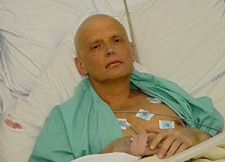
Poisoning Of Alexander Litvinenko
Wikipedia
Journalist Luke Harding described their behaviour as "idiotic, verging on suicidal"; while handling a leaky container, they stored it in their hotel rooms, used ordinary towels to clean up leaks, and eventually disposed of the poison in the toilet. ... They left radioactive traces again in their hotel prior to meeting Litvinenko, but did not administer the poison, perhaps due to security cameras in the meeting room. They again disposed of the poison via their room's toilet, and left London. [39] The third attempt to poison Litvinenko took place at around 5 pm of 1 November in the Millennium Hotel in Grosvenor Square . The bus he travelled in to the hotel had no signs of radioactivity – but large amounts had been detected at the hotel. [40] Polonium was subsequently found in a fourth-floor room and in a cup in the Pine Bar at the hotel. [41] After the Millennium bar, Litvinenko stopped at the office of Boris Berezovsky . ... These people include Norberto Andrade, the head barman and a long-time (27 years) worker at the hotel. He has described the situation thus: "When I was delivering gin and tonic to the table, I was obstructed. ... Around 4:30 pm he meets Lugovoy and Kovtun again in the Millennium Hotel in London, the meeting only lasting 20 minutes.
-
Echopraxia
Wikipedia
. ^ Tanner CM, Chamberland J (May 2001). "Latah in Jakarta, Indonesia". Mov. Disord . 16 (3): 526–9. doi : 10.1002/mds.1088 .
-
Pneumonitis
Mayo Clinic
Many irritants, ranging from airborne molds to chemotherapy drugs, have been linked to pneumonitis. ... An overdose of aspirin can cause pneumonitis. Molds and bacteria. Repeated exposure to some molds and bacteria can cause the lungs to become inflamed. Specific varieties of mold-related pneumonitis have received nicknames, such as "farmer's lung" or "hot tub lung." ... Inhaling airborne particles from moldy hay is one of the most common causes of occupational pneumonitis. Mold particles also can be inhaled during harvests of grain and hay. ... Home humidifiers are another common reservoir for mold. Cancer treatment Some chemotherapy drugs can cause pneumonitis, as can radiation therapy to the lungs.CCL2, TGFB1, TLR4, TNF, IL17A, IL33, IL13, IL6, IL1B, IFNG, MYD88, HMOX1, IL4, CCL11, SIRT1, CXCL1, CXCL5, CCL24, PARP1, IKBKB, CXCR2, AHR, MYLK, IL18, CCR2, CSF2, CCL17, EGR1, IL6ST, CCL8, PF4, TNFRSF1B, SPP1, IL1R1, CCL19, CASP1, CXCR3, AGT, TNFRSF1A, ABCF1, IL1R2, ITGB2, CX3CL1, POMC, CCL4, CCR9, CXCL9, CCR1, CCL7, IL2RB, CD40LG, IL5RA, CCR6, CCL20, COPD, NLRP3, CFTR, IL10, CXCL8, SFTPD, CD274, HMGB1, PDCD1, MPO, GABPA, NFE2L2, EGFR, MAPK14, IL5, AIMP2, PPARG, GRAP2, POLDIP2, RNF19A, CRK, MAPK1, HIF1A, AHSA1, ICAM1, CXCL2, IL1A, STAT3, MYDGF, ROS1, SERPINE1, PIK3CG, PIK3CD, SCGB1A1, IL9, ACE, DECR1, GPT, VEGFA, PTGS2, ELANE, TLR2, ALOX5, NM, PIK3CA, PIK3CB, CYBB, TP53, CAV1, IL25, PRMT1, SMUG1, IL22, WDR26, TLR3, HSPB1, IL17D, COX2, PTGDS, PDE4A, IL27, ATM, MIR155, SOCS3, MTOR, ITGAX, SFTPB, FPR1, FOS, FOXP3, FOXM1, PLA2G1B, FCGR3A, ACE2, RAC1, IFNA13, NMU, IFNA1, JUN, NOS3, JUNB, MUC1, JUND, MMP9, MIP, HPGDS, HSPB2, FOSB, TRPM8, ELN, TSLP, HSPB3, CCN2, NR1I2, LTB4R, CCR4, CEL, CD44, TIMP1, MIR125A, ARG1, SEMA7A, VCAM1, ANGPT1, AKT1, MTCO2P12, ADAM8, PARP9, SLC27A5, SFTPC, F2R, MARK2, DEGS1, MRC1, PTAFR, ARSA, TNNI3, MMP8, IL37, ALDH7A1, BCL2, MIF, IL17C, MCL1, TNFAIP6, LGALS3, TSPO, THBS1, LEP, TM7SF2, CASP3, CAT, PLXNC1, RUNX1, AOC3, HDAC6, CXCL10, RGS2, ENTPD1, AR, MIR21, MTHFR, MUC5AC, CXCR4, SELL, F3, ADORA2B, VIP, PI3, RIPK3, ARHGEF5, PGF, PLD2, F2RL1, PTGDR2, KLHL2, SFTPA2, ALK, ALOX15, CXCL12, ICOSLG, SFTPA1, OSM, MIR511, NOS2, APEX1, APOA1, NFATC2, MAPK3, HAVCR1, CRLF2, NKX2-1, SLC52A2, CCN1, GDF15, TREM1, SCGB3A2, ADAM17, SGPL1, CREBBP, CSF1, HSPA1B, TIMELESS, HP, CTLA4, CCL3, CTNNB1, CTSG, GZMB, TRPA1, FPR2, DNASE1, HSH2D, NR3C1, HAVCR2, ACKR3, SLC12A2, CCL18, SIGIRR, S100A9, HSPA1A, ABCA3, CCR8, FOXO3, IL2RA, IL2, RPS19, PWAR1, CLOCK, CLDN1, RNGTT, TRAF3IP2, JTB, TNFSF14, KCNK6, LRPPRC, CYSLTR1, MSC, USP13, SCAF11, RIPK1, AREL1, SART3, TNFRSF25, SLIT2, FOSL1, CXCR6, ADIPOQ, SOCS1, BECN1, SMC3, GPRC5A, XPR1, MIA, PROCR, EXO1, TNFRSF6B, ATG7, PRDX4, PER2, LPAR2, FST, ARHGEF2, CXCL13, SOCS2, IRF9, IL27RA, KLF4, PDE5A, GGPS1, PIAS1, AIM2, IKBKG, S1PR2, ITM2B, CCL26, BTRC, FOXN1, PLA2G6, IMMT, POSTN, PTGES, LOH19CR1, ABCA1, LILRB4, MMP28, SPESP1, PRSS55, TRIM65, PIKFYVE, MLKL, PGAM5, CBLL2, PTPRVP, IL31RA, IL17RE, DCD, IL22RA2, UCN3, BUD23, IL17F, CLEC6A, BPIFB1, NLRP12, ESAM, ATG16L2, RETNLB, SPZ1, CARD11, ASCC2, ITCH, ZC3H12A, MAP3K19, TNFAIP8L2, MUL1, LCLAT1, OR10A4, CLEC9A, MIR27A, H3P42, LINC02605, IRAIN, LOC102723996, OCLN, LINC01672, MIR1246, MIR636, LINC00273, MIR146B, MIR326, MIR17HG, MIR34B, MIR24-1, KCNRG, MIR23A, MIR223, MIR199A2, MIR199A1, MIR17, MIR150, MIR141, MIR127, MIR122, LIN28B, IL31, MALAT1, LAMA1, SPAG16, COLEC11, WWP2, WNK4, ISYNA1, TRPV2, BPIFA1, CLEC1B, CKLF, GEMIN4, IL20, TBX21, IL19, ICOS, CARD10, TBK1, DROSHA, STK39, IL17B, SIGLEC8, NAAA, CHIA, SND1, LATS2, SLC17A5, IBTK, LY96, BRD4, SULF1, PHLPP2, TPX2, IRAK3, PSIP1, NELFCD, XRCC1, IL23A, CEMIP, MPPE1, P2RY12, CLEC7A, SEMA4A, IFIH1, NOD2, VSIR, TRPV4, SCAF1, NLRC4, EPG5, CFAP97, ABHD6, SPHK2, FXYD5, CHST7, LTB4R2, GSDMB, IL26, SLC52A1, MARCHF1, SARS2, TEX10, FEV, DGCR8, WNT4, TLR9, IL20RA, ZFP36, RORA, WNT5A, EPHX2, FDPS, FCGR3B, FCGR2B, FCGR1A, FABP5, FABP4, F8, ETS2, ESR2, ESR1, ESAT, ERBB2, EPO, SERPINB1, IL1RN, EPHA2, EGF, EDNRA, EDN1, S1PR1, ECE1, HBEGF, DPP4, CFD, CYP2B6, CYP2A13, CYP1A2, CUX1, FER, FES, FKBP4, FOXF1, IGF1, IFNB1, IFNAR1, HSPA4, HSD11B1, HRG, HPX, HLA-E, HLA-DOA, HLA-C, CFHR1, GTF2H4, GSTP1, GSTM1, GSR, GRN, GPX1, GCLM, GCLC, GLA, GHRHR, GDF2, GATA3, GAS6, FXN, FLT3LG, FOXD1, CTSS, VCAN, CSF3, BRAF, BMP4, BDKRB1, BCL6, ATF3, AQP5, AQP4, AQP1, FASLG, FAS, APRT, APOE, AOC2, AOAH, ANXA5, ANXA2, ANK1, ANGPT2, ALOX12, AKR1B1, ALB, AKT2, AGER, ADRB2, ADORA3, ADORA2A, ADA, ABL1, BMP6, SERPING1, CRP, C3AR1, CLDN7, MAP3K8, COL3A1, COL1A1, CNR2, CNC2, CMKLR1, CCR7, CCR3, CLCN3, CIRBP, CHUK, CHRNA4, CHRM3, CHI3L1, CEACAM5, CDKN2A, CD74, CD40, TNFRSF8, CD28, CD14, CD5L, CD2, CALR, CALCR, C5AR1, IGF2R, IL7, VWF, CCL13, SMPD1, SLC10A1, SLC8A1, SLC6A8, SLC5A1, PMEL, SGK1, SFRP5, SDC4, SDC2, SDC1, CCL22, CCL21, CCL5, IL11, SCT, SARS1, SAA3P, S100B, S100A12, S100A1, RRBP1, RNASE3, RASA1, PLAAT4, RARA, RAP1B, MOK, SMPD2, SOD2, TRIM21, SST, VTN, TRPV1, VHL, VDR, TXN, TNFSF4, TTF1, TRPM2, TRAF5, NR2C2, CRISP2, TNFAIP3, KLF10, THOP1, THBS2, TGFA, TFRC, TFPI, TERT, PPP1R11, TRBV20OR9-2, ZEB1, MAP3K7, TAGLN, TAC1, STAT1, ST2, RAD51, PTX3, PTHLH, NFKB1, NEO1, NCF4, COX1, CD200, MMP12, MMP3, MMP2, MFAP1, CD46, MCAM, MAS1, NBR1, LSP1, LIG4, LGALS9, LAIR1, KNG1, JAK1, ITGB6, ITGB4, ITGAV, ITGA5, ISG20, IRF4, IDO1, IL16, IL15, NFATC3, NFKB2, PTGS1, NINJ1, PTGER4, PTGER3, MAPK8, PRKCD, PRKCA, PRKAR1A, PTPA, CTSA, PLD1, PLCL1, PLA2G5, PLA2G4A, PLA2G2A, SERPINA1, PHB, CFP, PER1, PECAM1, PDE7A, PCP4, PRKN, PEBP1, P4HB, P2RY6, OAS3, NPR1, NOTCH1, H3P10

-
Faciocardiomelic Syndrome
OMIM
Radiologic findings included cuboid-shaped vertebral bodies, hypoplastic pelvis, slender long bones with thin cortices, molding disturbance of metacarpal bones, proximal megaepiphyses of metatarsal bones, hypertrophy of first ray, osteopenia, and delayed and dysharmonic bone age. ... INHERITANCE - Autosomal recessive GROWTH Other - Macrosomia, neonatal HEAD & NECK Head - Microcephaly Face - Micrognathia Eyes - Exotropia - Ptosis - Telecanthus - Short eyelashes Nose - Flat nasal bridge - Anteverted nostrils - Broad nasal fossae - Long philtrum Mouth - Prominent maxilla - Macrostomia Teeth - Malocclusion Neck - Large neck CARDIOVASCULAR Heart - Single atrium CHEST External Features - Prominent trapezius muscles Ribs Sternum Clavicles & Scapulae - Narrow shoulders SKELETAL - Osteopenia - Delayed and dysharmonic bone age Spine - Cuboid-shaped vertebral bodies Pelvis - Hypoplastic pelvis Limbs - Slender long bones - Long bones have thin cortices Hands - Polydactyly type A - Molding disturbance of metacarpal bones Feet - Polydactyly type A - Proximal megaepiphysis of metatarsal bones - Hypertrophy of first ray NEUROLOGIC Central Nervous System - Mental retardation ▲ Close
- Legionnaires’ Disease GARD
-
Velopharyngeal Insufficiency
Wikipedia
Disorder of the mouth Velopharyngeal insufficiency Other names VPI Specialty Oral and maxillofacial surgery Velopharyngeal insufficiency is a disorder of structure that causes a failure of the velum (soft palate) to close against the posterior pharyngeal wall (back wall of the throat) during speech in order to close off the nose (nasal cavity) during oral speech production. ... Nasopharyngoscopy provides a view of the velum (soft palate) and pharyngeal walls (walls of the throat) during nasal breathing and during speech. ... Also the patient’s age, [25] [26] and the size and nature of the velopharyngeal defect, contribute to which technique is used. [26] [27] Posterior wall augmentation [ edit ] Posterior wall augmentation Another option for diminishing the velopharyngeal port is posterior wall augmentation . ... Incidence of oronasal fistula formation after nasoalveolar molding and primary cleft repair. J Craniofac Surg. 2013 . 24(1):57-61. ^ Losken A, Williams JK, Burstein FD, et al. ... Cleft Palate J 1979;16:46e55. ^ a b c Gray SD, Pinborough-zimmerman J, Catten M, et al. Posterior wall augmentation for treatment of velopharyngeal insufficiency.
-
Exothrix
Wikipedia
References [ edit ] v t e Fungal infection and mesomycetozoea Superficial and cutaneous ( dermatomycosis ): Tinea = skin ; Piedra ( exothrix / endothrix ) = hair Ascomycota Dermatophyte ( Dermatophytosis ) By location Tinea barbae / tinea capitis Kerion Tinea corporis Ringworm Dermatophytids Tinea cruris Tinea manuum Tinea pedis (athlete's foot) Tinea unguium/onychomycosis White superficial onychomycosis Distal subungual onychomycosis Proximal subungual onychomycosis Tinea corporis gladiatorum Tinea faciei Tinea imbricata Tinea incognito Favus By organism Epidermophyton floccosum Microsporum canis Microsporum audouinii Trichophyton interdigitale/mentagrophytes Trichophyton tonsurans Trichophyton schoenleini Trichophyton rubrum Trichophyton verrucosum Other Hortaea werneckii Tinea nigra Piedraia hortae Black piedra Basidiomycota Malassezia furfur Tinea versicolor Pityrosporum folliculitis Trichosporon White piedra Subcutaneous , systemic , and opportunistic Ascomycota Dimorphic (yeast+mold) Onygenales Coccidioides immitis / Coccidioides posadasii Coccidioidomycosis Disseminated coccidioidomycosis Primary cutaneous coccidioidomycosis . Primary pulmonary coccidioidomycosis Histoplasma capsulatum Histoplasmosis Primary cutaneous histoplasmosis Primary pulmonary histoplasmosis Progressive disseminated histoplasmosis Histoplasma duboisii African histoplasmosis Lacazia loboi Lobomycosis Paracoccidioides brasiliensis Paracoccidioidomycosis Other Blastomyces dermatitidis Blastomycosis North American blastomycosis South American blastomycosis Sporothrix schenckii Sporotrichosis Talaromyces marneffei Talaromycosis Yeast -like Candida albicans Candidiasis Oral Esophageal Vulvovaginal Chronic mucocutaneous Antibiotic candidiasis Candidal intertrigo Candidal onychomycosis Candidal paronychia Candidid Diaper candidiasis Congenital cutaneous candidiasis Perianal candidiasis Systemic candidiasis Erosio interdigitalis blastomycetica C. auris C. glabrata C. lusitaniae C. tropicalis Pneumocystis jirovecii Pneumocystosis Pneumocystis pneumonia Mold -like Aspergillus Aspergillosis Aspergilloma Allergic bronchopulmonary aspergillosis Primary cutaneous aspergillosis Exophiala jeanselmei Eumycetoma Fonsecaea pedrosoi / Fonsecaea compacta / Phialophora verrucosa Chromoblastomycosis Geotrichum candidum Geotrichosis Pseudallescheria boydii Allescheriasis Basidiomycota Cryptococcus neoformans Cryptococcosis Trichosporon spp Trichosporonosis Zygomycota ( Zygomycosis ) Mucorales ( Mucormycosis ) Rhizopus oryzae Mucor indicus Lichtheimia corymbifera Syncephalastrum racemosum Apophysomyces variabilis Entomophthorales ( Entomophthoramycosis ) Basidiobolus ranarum Basidiobolomycosis Conidiobolus coronatus / Conidiobolus incongruus Conidiobolomycosis Microsporidia ( Microsporidiosis ) Enterocytozoon bieneusi / Encephalitozoon intestinalis Mesomycetozoea Rhinosporidium seeberi Rhinosporidiosis Ungrouped Alternariosis Fungal folliculitis Fusarium Fusariosis Granuloma gluteale infantum Hyalohyphomycosis Otomycosis Phaeohyphomycosis
-
White Superficial Onychomycosis
Wikipedia
ISBN 0-7216-2921-0 . v t e Fungal infection and mesomycetozoea Superficial and cutaneous ( dermatomycosis ): Tinea = skin ; Piedra ( exothrix / endothrix ) = hair Ascomycota Dermatophyte ( Dermatophytosis ) By location Tinea barbae / tinea capitis Kerion Tinea corporis Ringworm Dermatophytids Tinea cruris Tinea manuum Tinea pedis (athlete's foot) Tinea unguium/onychomycosis White superficial onychomycosis Distal subungual onychomycosis Proximal subungual onychomycosis Tinea corporis gladiatorum Tinea faciei Tinea imbricata Tinea incognito Favus By organism Epidermophyton floccosum Microsporum canis Microsporum audouinii Trichophyton interdigitale/mentagrophytes Trichophyton tonsurans Trichophyton schoenleini Trichophyton rubrum Trichophyton verrucosum Other Hortaea werneckii Tinea nigra Piedraia hortae Black piedra Basidiomycota Malassezia furfur Tinea versicolor Pityrosporum folliculitis Trichosporon White piedra Subcutaneous , systemic , and opportunistic Ascomycota Dimorphic (yeast+mold) Onygenales Coccidioides immitis / Coccidioides posadasii Coccidioidomycosis Disseminated coccidioidomycosis Primary cutaneous coccidioidomycosis . Primary pulmonary coccidioidomycosis Histoplasma capsulatum Histoplasmosis Primary cutaneous histoplasmosis Primary pulmonary histoplasmosis Progressive disseminated histoplasmosis Histoplasma duboisii African histoplasmosis Lacazia loboi Lobomycosis Paracoccidioides brasiliensis Paracoccidioidomycosis Other Blastomyces dermatitidis Blastomycosis North American blastomycosis South American blastomycosis Sporothrix schenckii Sporotrichosis Talaromyces marneffei Talaromycosis Yeast -like Candida albicans Candidiasis Oral Esophageal Vulvovaginal Chronic mucocutaneous Antibiotic candidiasis Candidal intertrigo Candidal onychomycosis Candidal paronychia Candidid Diaper candidiasis Congenital cutaneous candidiasis Perianal candidiasis Systemic candidiasis Erosio interdigitalis blastomycetica C. auris C. glabrata C. lusitaniae C. tropicalis Pneumocystis jirovecii Pneumocystosis Pneumocystis pneumonia Mold -like Aspergillus Aspergillosis Aspergilloma Allergic bronchopulmonary aspergillosis Primary cutaneous aspergillosis Exophiala jeanselmei Eumycetoma Fonsecaea pedrosoi / Fonsecaea compacta / Phialophora verrucosa Chromoblastomycosis Geotrichum candidum Geotrichosis Pseudallescheria boydii Allescheriasis Basidiomycota Cryptococcus neoformans Cryptococcosis Trichosporon spp Trichosporonosis Zygomycota ( Zygomycosis ) Mucorales ( Mucormycosis ) Rhizopus oryzae Mucor indicus Lichtheimia corymbifera Syncephalastrum racemosum Apophysomyces variabilis Entomophthorales ( Entomophthoramycosis ) Basidiobolus ranarum Basidiobolomycosis Conidiobolus coronatus / Conidiobolus incongruus Conidiobolomycosis Microsporidia ( Microsporidiosis ) Enterocytozoon bieneusi / Encephalitozoon intestinalis Mesomycetozoea Rhinosporidium seeberi Rhinosporidiosis Ungrouped Alternariosis Fungal folliculitis Fusarium Fusariosis Granuloma gluteale infantum Hyalohyphomycosis Otomycosis Phaeohyphomycosis This infection-related cutaneous condition article is a stub .
-
Pelvis Justo Major
Wikipedia
With a huge Justo Major Pelvis , there is no pelvic bone "molding" of the fetal head. [3] With the average pelvic size ( 2 / 3 or less Justo Major size) the usual pelvic molding process slows the birth, resulting in a slow and gradual stretching of the vaginal opening for primiparous women.
-
Vaginal Agenesis
Mayo Clinic
Your surgeon makes an incision to create the vaginal opening, places the tissue graft over a mold to create the vagina and places it in the newly formed canal. The mold remains in place about one week. Generally, after surgery you keep the mold or a vaginal dilator in place but can remove it when you use the bathroom or have sexual intercourse. ... After the device is removed, you'll use a mold of varying sizes for about three months. ... You won't have to use a vaginal dilator every day after this surgery, and you're less likely to need artificial lubrication for sexual intercourse. After surgery, use of a mold, dilation or frequent sexual intercourse is needed to maintain a functional vagina.
-
Geotrichosis
Wikipedia
X-rays may show cavitation that is located the walls of the lungs tissues. The lung tissue resemble the early signs of tuberculosis . [5] The results of an x-ray examination of pulmonary geotrichosis presents smooth, dense patchy infiltrations and some cavities. ... External links [ edit ] Classification D ICD - 10 : B48.3 ICD - 9-CM : 117.9 MeSH : D005847 DiseasesDB : 33138 v t e Fungal infection and mesomycetozoea Superficial and cutaneous ( dermatomycosis ): Tinea = skin ; Piedra ( exothrix / endothrix ) = hair Ascomycota Dermatophyte ( Dermatophytosis ) By location Tinea barbae / tinea capitis Kerion Tinea corporis Ringworm Dermatophytids Tinea cruris Tinea manuum Tinea pedis (athlete's foot) Tinea unguium/onychomycosis White superficial onychomycosis Distal subungual onychomycosis Proximal subungual onychomycosis Tinea corporis gladiatorum Tinea faciei Tinea imbricata Tinea incognito Favus By organism Epidermophyton floccosum Microsporum canis Microsporum audouinii Trichophyton interdigitale/mentagrophytes Trichophyton tonsurans Trichophyton schoenleini Trichophyton rubrum Trichophyton verrucosum Other Hortaea werneckii Tinea nigra Piedraia hortae Black piedra Basidiomycota Malassezia furfur Tinea versicolor Pityrosporum folliculitis Trichosporon White piedra Subcutaneous , systemic , and opportunistic Ascomycota Dimorphic (yeast+mold) Onygenales Coccidioides immitis / Coccidioides posadasii Coccidioidomycosis Disseminated coccidioidomycosis Primary cutaneous coccidioidomycosis . Primary pulmonary coccidioidomycosis Histoplasma capsulatum Histoplasmosis Primary cutaneous histoplasmosis Primary pulmonary histoplasmosis Progressive disseminated histoplasmosis Histoplasma duboisii African histoplasmosis Lacazia loboi Lobomycosis Paracoccidioides brasiliensis Paracoccidioidomycosis Other Blastomyces dermatitidis Blastomycosis North American blastomycosis South American blastomycosis Sporothrix schenckii Sporotrichosis Talaromyces marneffei Talaromycosis Yeast -like Candida albicans Candidiasis Oral Esophageal Vulvovaginal Chronic mucocutaneous Antibiotic candidiasis Candidal intertrigo Candidal onychomycosis Candidal paronychia Candidid Diaper candidiasis Congenital cutaneous candidiasis Perianal candidiasis Systemic candidiasis Erosio interdigitalis blastomycetica C. auris C. glabrata C. lusitaniae C. tropicalis Pneumocystis jirovecii Pneumocystosis Pneumocystis pneumonia Mold -like Aspergillus Aspergillosis Aspergilloma Allergic bronchopulmonary aspergillosis Primary cutaneous aspergillosis Exophiala jeanselmei Eumycetoma Fonsecaea pedrosoi / Fonsecaea compacta / Phialophora verrucosa Chromoblastomycosis Geotrichum candidum Geotrichosis Pseudallescheria boydii Allescheriasis Basidiomycota Cryptococcus neoformans Cryptococcosis Trichosporon spp Trichosporonosis Zygomycota ( Zygomycosis ) Mucorales ( Mucormycosis ) Rhizopus oryzae Mucor indicus Lichtheimia corymbifera Syncephalastrum racemosum Apophysomyces variabilis Entomophthorales ( Entomophthoramycosis ) Basidiobolus ranarum Basidiobolomycosis Conidiobolus coronatus / Conidiobolus incongruus Conidiobolomycosis Microsporidia ( Microsporidiosis ) Enterocytozoon bieneusi / Encephalitozoon intestinalis Mesomycetozoea Rhinosporidium seeberi Rhinosporidiosis Ungrouped Alternariosis Fungal folliculitis Fusarium Fusariosis Granuloma gluteale infantum Hyalohyphomycosis Otomycosis Phaeohyphomycosis


