Salla Disease

<p>Salla disease (SD), is an autosomal recessive lysosomal storage disease characterized by early physical impairment and intellectual disability. It was first described in 1979, after Salla, a municipality in Finnish Lapland. Salla disease is one of 40 Finnish heritage diseases and affects approximately 130 individuals, mainly from Finland and Sweden. p>
Presentation
<p>Individuals with Salla disease may present with nystagmus in the first months of life as well as hypotonia, reduced muscle tone and strength, and cognitive impairment. The most severely impaired children do not walk or acquire language, but the typical patient learns to walk and speak and has normal life expectancy. The MRI shows arrested or delayed myelination. p>Genetics
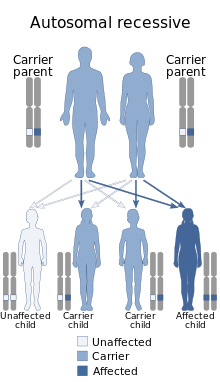
Salla disease has an autosomal recessive pattern of inheritance.
Diagnosis
<p>A diagnosis of this disorder can be made by measuring urine to look for elevated levels of free sialic acid. Prenatal testing is also available for known carriers of this disorder. p>Treatment
<p>There is no cure for Salla disease. Treatment is limited to controlling the symptoms of this disorder. Anti-convulsant medication may control seizure episodes. Physical therapists can assist an affected individual to build muscle strength and coordination. p>Prognosis
<p>The life expectancy for individuals with Salla disease is between the ages of 50 and 60. p>See also
- Infantile free sialic acid storage disease (ISSD)